
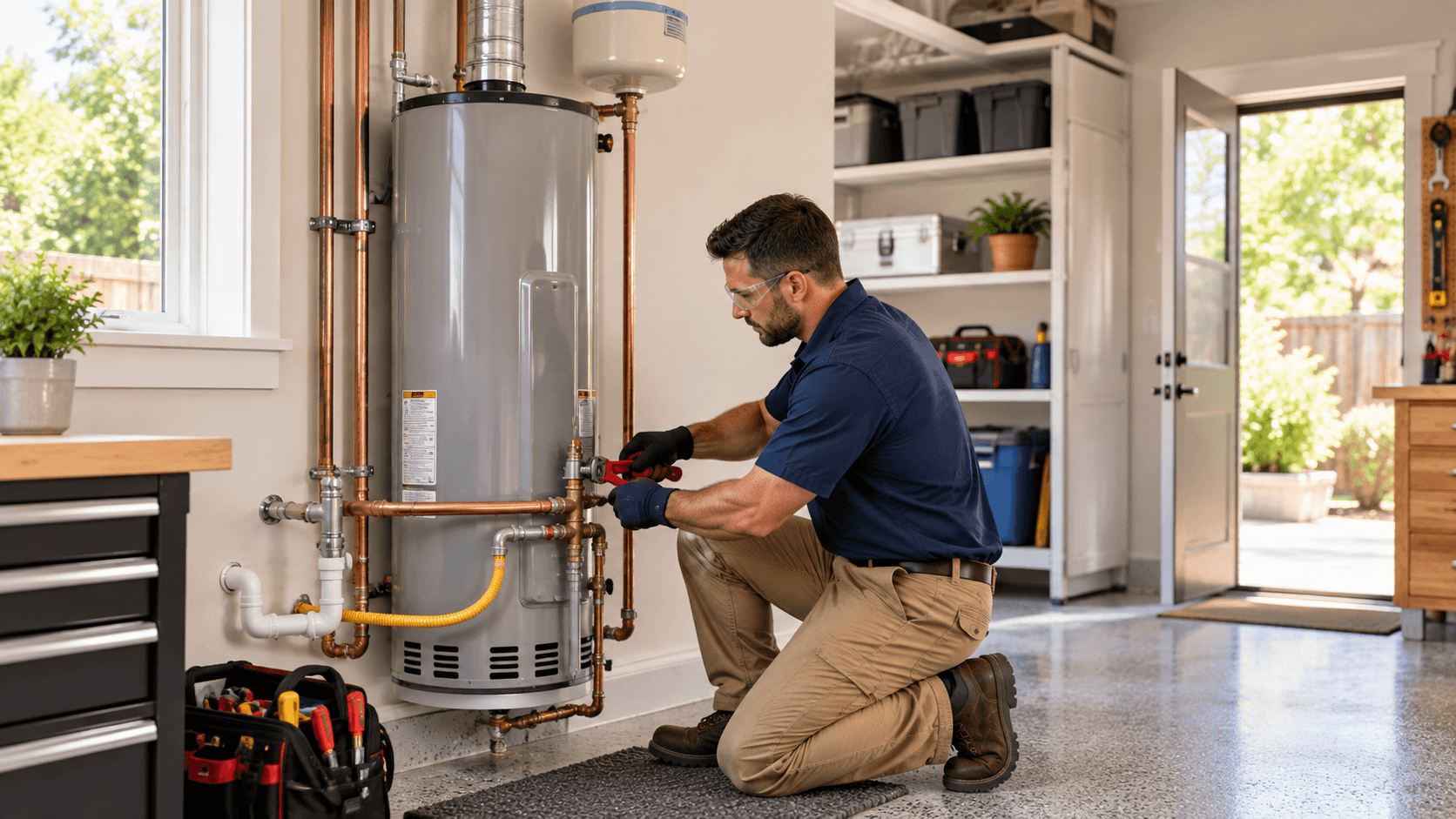
Yes, a permit is required to replace a water heater in Simi Valley, California. The installation must comply with applicable California plumbing and safety codes, including seismic strapping requirements to help prevent earthquake-related damage.
Water heater replacement costs depend on the unit type, installation labor, permit fees, and any necessary code upgrades. Before starting the project, homeowners should confirm permit and inspection requirements with the City of Simi Valley to avoid unexpected expenses, inspection issues, and installation delays.
This guide explains Simi Valley’s water heater permit requirements, safety codes, seismic strapping rules, and the factors that can affect your total replacement cost.
Why Is a Permit Required for Water Heater Replacement?
A permit is required for water heater replacement in Simi Valley to help ensure the installation complies with applicable building and safety codes. The permitting process allows the City to review the work and require inspections where applicable.
Key Reasons Permits Are Required
- Safety and Code Compliance: A permit helps verify that the replacement meets applicable plumbing, electrical, gas, and installation safety requirements.
- Safety Component Verification: The installation may need to meet requirements for temperature and pressure relief valves, discharge piping, gas venting, and seismic strapping, where applicable.
- Inspection Requirements: A permit allows the City to determine whether an inspection is necessary to verify compliance with applicable codes.
- Local Regulations: Simi Valley’s Building and Safety Division oversees local permitting requirements. Homeowners should confirm the requirements for their specific water heater replacement before work begins.
When Is a Permit Required for Water Heater Replacement?
In Simi Valley, a permit is required to install a new water heater, replace an existing unit, or relocate a water heater. Additional plumbing, gas, electrical, or venting modifications may require separate approvals depending on the scope of work.
Water Heater Projects That May Require Additional Permits or Code Compliance
- Water Heater Replacement: Replacing an existing gas or electric water heater with a new unit, even if installed in the same location.
- Water Heater Relocation: Moving a water heater to another location, which may require changes to plumbing, gas lines, electrical connections, or venting.
- Plumbing Modifications: Installing or relocating water supply lines, modifying drainage connections, or updating the discharge piping of temperature-and-pressure relief valves.
- Gas Line and Venting Work: Modifying gas connections, installing new gas lines, or changing exhaust venting for a gas water heater.
- Electrical Modifications: Adding electrical circuits or updating wiring to accommodate a new electric water heater.
- Required Safety Upgrades: Updating seismic strapping, drain pans, thermal expansion controls, or other safety components to meet applicable codes.
Before starting the replacement, homeowners should confirm permit requirements and inspection procedures with the City of Simi Valley’s Building and Safety Division.
How to Apply for a Water Heater Permit
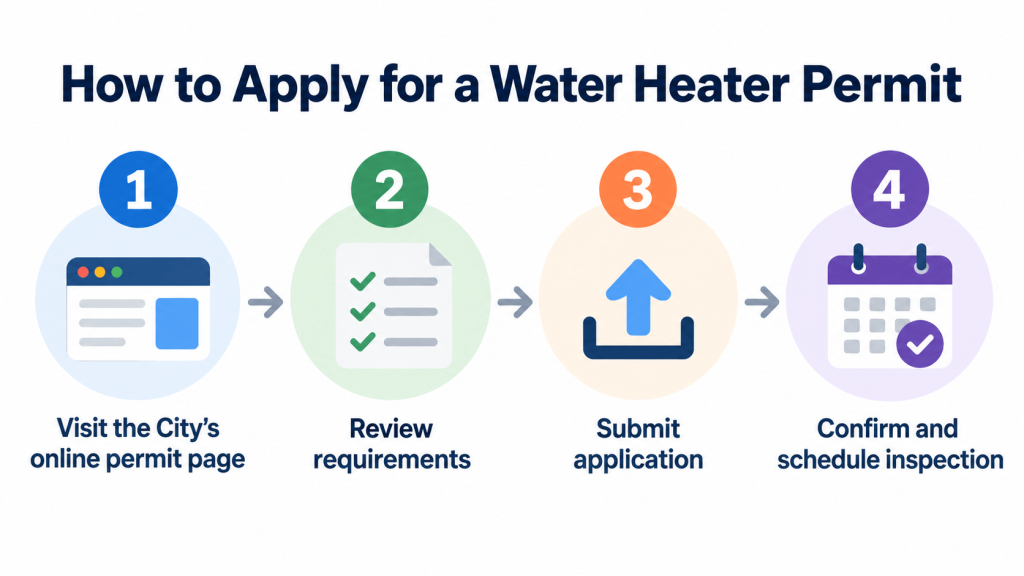
Homeowners in Simi Valley can apply for a water heater replacement permit through the City’s online permit submission process. Before starting the work, check the city’s requirements and prepare the information needed for your application.
Steps to Apply for a Permit
- Visit the Official Website: Open the City of Simi Valley’s Online Permit Submittal Instructions page.
- Review the Requirements: Follow the city’s instructions to determine the appropriate permit application process for your water heater replacement.
- Submit Your Application: Provide the requested project details and supporting information through the city’s designated submission process.
- Follow Inspection Requirements: Once the permit is issued, confirm whether an inspection is required and arrange it according to the city’s instructions.
Following the city’s official process helps homeowners understand the permit requirements before replacing a water heater and ensures the work can be completed in accordance with applicable local codes.
Water Heater Replacement Codes and Safety Requirements
Water heater replacement in Simi Valley must comply with California plumbing, building, mechanical, and electrical codes, as well as applicable local requirements. These standards help ensure safe water connections, proper venting, pressure protection, and earthquake safety. The City of Simi Valley lists the 2025 California Plumbing Code and related state codes, effective January 1, 2026, among its adopted codes.
Permits and Licensing
- Plumbing Permit: Simi Valley requires a permit to install a new water heater, replace an existing one, or relocate a water heater. Homeowners should confirm the application and inspection requirements with the city’s Building and Safety Division.
- Qualified Contractor: Use a properly licensed contractor when required for the work. The installer should follow applicable plumbing, gas, electrical, and manufacturer requirements to help ensure a safe, code-compliant installation.
Core Safety Requirements and Codes
- Temperature and Pressure Relief Valve: A water heater must have an approved, properly rated temperature-and-pressure relief device installed in accordance with the applicable code and the manufacturer’s instructions. A shutoff valve must not be installed between the relief valve and the water heater.
- Relief Valve Discharge Piping: The discharge pipe must be installed correctly and remain open and unobstructed to allow hot water or pressure to be released safely when necessary.
- Seismic Strapping: California requires residential water heaters to be anchored or strapped to resist movement during an earthquake. Straps must be positioned and secured in accordance with applicable code requirements.
- Drain Pans: A corrosion-resistant drain pan is required in specified locations where a leak could cause damage, including certain attic and floor assemblies. The pan must have an approved drain where required.
- Gas, Electrical, and Venting Safety: Gas and electric water heaters must have compliant connections. Gas models also require adequate combustion air and safe exhaust venting, while electrical work must comply with applicable electrical code requirements.
- Thermal Expansion: A closed plumbing system may require an approved expansion-control device to manage pressure increases as water heats up.
- Installation Clearances and Access: The water heater must have the access, working space, and clearances required by the applicable code and manufacturer’s instructions. Requirements can vary by unit type and installation location.
To make sure your water heater replacement meets local requirements, review the City of Simi Valley’s Municipal Codes and Ordinances. You can also check the city’s Building and Safety FAQ for additional guidance on permits and code compliance before starting the installation.
Water Heater Strapping Requirements in Simi Valley
Water heater strapping helps prevent a tank from tipping or shifting during an earthquake. In Simi Valley, installations must comply with applicable California seismic safety requirements to reduce the risk of damage to plumbing and gas connections.
Water heater strapping helps prevent a tank from tipping or shifting during an earthquake. In Simi Valley, installations must comply with applicable California seismic safety requirements to reduce the risk of damage to plumbing and gas connections.
What Is Water Heater Seismic Strapping?
Seismic strapping involves securing a water heater to the building structure with approved metal straps or restraints. These restraints help keep the tank in place during earthquake movement.
Why Is Strapping Important in California?
Earthquakes can cause unsecured water heaters to tip over or shift. Proper strapping helps reduce the risk of gas line damage, water leaks, property damage, and other safety hazards.
Applicable Strapping Requirements
California requirements address strap placement, secure anchoring, and structural support. Key installation considerations include:
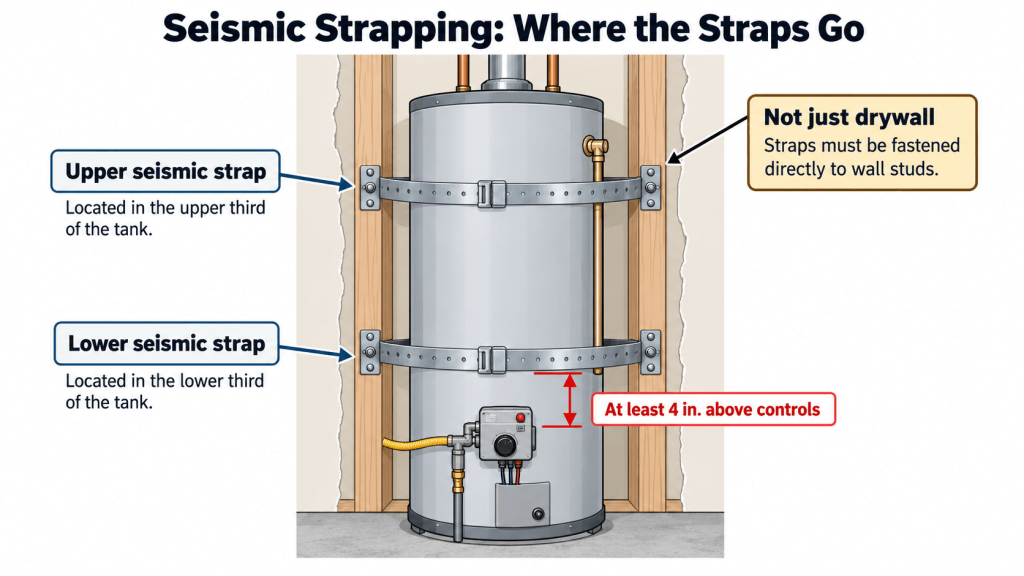
- Strap Placement: Restraints are generally positioned within the upper and lower thirds of the tank.
- Clearance: The lower strap should be at least 4 inches above the water heater controls, where required by the applicable code.
- Structural Support: Straps must be securely fastened to suitable structural supports, not only to drywall.
- Approved Materials: Use an appropriate seismic strapping system installed in accordance with applicable code requirements and manufacturer instructions.
For additional technical guidance, review the Orange County Public Works Water Heater Requirements PDF. Because this document references an older code edition, confirm current requirements with the City of Simi Valley Building and Safety Division.
Risks of Improper Water Heater Strapping
An unsecured water heater may tip or shift during an earthquake, potentially damaging gas and water connections. Homeowners should have missing, loose, or incorrectly installed restraints assessed and corrected to meet applicable safety requirements.
How Permits and Code Compliance Affect Water Heater Replacement Costs
Water heater replacement costs depend on the unit type, installation labor, permit fees, and any safety upgrades needed to meet current code requirements. In Simi Valley, homeowners should review the full estimate to understand which expenses are included in the standard replacement and which may cost extra.
Water Heater Replacement and Labor Costs
The total cost depends on the water heater’s size, fuel type, energy efficiency, and installation complexity. Replacing an existing tank with a similar model is generally simpler than switching to a tankless system, which may require additional venting, gas line, or electrical work.
Permit and Inspection Fees
Simi Valley requires a permit for water heater installation and replacement. Permit and inspection charges depend on the applicable city fee schedule and project requirements. Homeowners can check the City of Simi Valley’s permit submission instructions and official fee schedule for current charges.
Seismic Strapping and Additional Materials
A replacement may require seismic straps, approved connectors, a drain pan, a thermal expansion tank, or updated temperature-and-pressure relief discharge piping. The additional cost depends on which items are missing, damaged, or required for the new installation.
Unexpected Repairs and Code Upgrades
Older installations may need additional work to meet current safety requirements. Repairs to gas connections, exhaust venting, plumbing lines, electrical components, or drainage systems can increase the final bill. Ask your contractor to identify these potential upgrades before work begins.
Example Water Heater Replacement Cost Breakdown
The following figures are illustrative planning estimates, not confirmed Simi Valley quotes or official city fees. Actual costs depend on the selected equipment, labor, site conditions, permit fees, and required upgrades.
| Cost item | Estimated amount |
|---|---|
| Standard tank water heater replacement, including equipment and installation | $1,100–$2,750 |
| Permit and disposal costs, if not included above | $60–$375 |
| Additional seismic strapping or safety materials | Varies by installation |
| Gas line, venting, plumbing, or electrical upgrades | Quoted separately if needed |
These ranges are based on published Simi Valley-area pricing references and should not be added together automatically because some contractor quotes already include permits, disposal, or code upgrades.
To compare estimates accurately, request an itemized quote showing the water heater, labor, permit and inspection fees, standard materials, and any additional code-related work. Confirm the final permit charges directly with the City of Simi Valley.
What Should Homeowners Check Before Replacing a Water Heater?
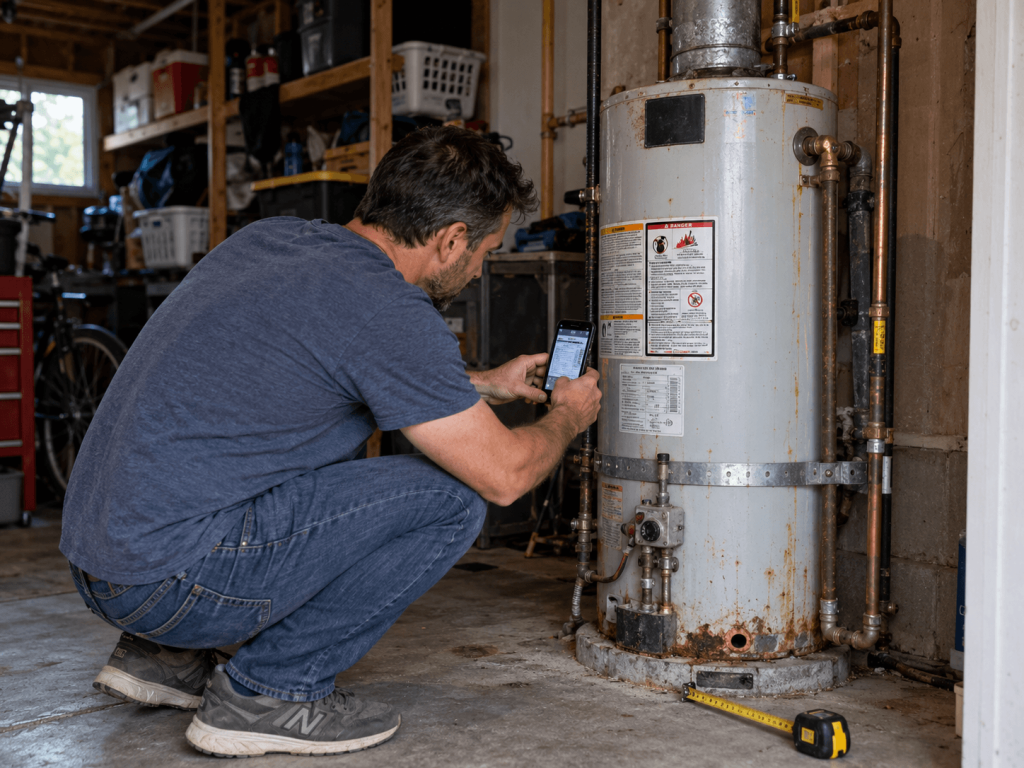
Before replacing a water heater in Simi Valley, homeowners should check the unit’s age, condition, fuel type, capacity, and installation requirements. Reviewing these details in advance helps you choose a suitable replacement, plan for potential upgrades, and avoid unexpected costs.
Key Checks Before Replacing a Water Heater
- Unit Age and Lifespan: Traditional tank water heaters typically last around 8–12 years, while tankless models may last 20 years or longer with proper maintenance. Consider replacement if your unit is aging, frequently needs repairs, or shows signs of failure.
- Water Pressure: Check whether your home’s water pressure is within the water heater manufacturer’s recommended range. Excessive pressure can strain plumbing connections and equipment. A pressure-reducing valve or other corrective measures may be needed if pressure exceeds applicable limits.
- Fuel Source and Capacity: Identify whether your current water heater uses natural gas, propane, or electricity, and check its tank capacity or flow rate (for a tankless unit). Changing the fuel type or upgrading the system may require additional gas, electrical, or plumbing work.
- Venting and Combustion Air: Gas water heaters need proper ventilation and adequate combustion air. Have damaged vent pipes, corrosion, or signs of exhaust backdrafting checked by a qualified professional to help prevent carbon monoxide hazards.
- Space and Installation Clearances: Measure the available installation space and check the manufacturer’s clearance and access requirements. Ensure the new unit can be installed safely with access to its controls, shutoff valves, and temperature-and-pressure relief components.
- Leaks and Visible Damage: Look for water around the tank, rust, corrosion, or leaking connections. A leaking tank may need replacement, while a leak from a fitting or valve may be repairable. Identify the source before deciding on the next step.
- Warranty and Maintenance Records: Review the existing unit’s warranty and maintenance history, if available. Check the replacement model’s warranty conditions and follow its installation and maintenance requirements to help preserve coverage.
Before scheduling the replacement, confirm permit requirements with the City of Simi Valley Building and Safety Division. Ask your contractor to assess any necessary code upgrades and include them in the written estimate.
Conclusion
Replacing a water heater in Simi Valley involves more than choosing a new unit. Homeowners should check the system’s age, fuel type, water pressure, venting, seismic strapping, and installation requirements before starting the project. Getting the required permit and inspection can help ensure the replacement meets applicable local codes and safety standards.
Before hiring a contractor, request a detailed estimate that includes permit fees, labor, and any necessary upgrades. Sketchley & Mason, Inc. can be your next point of contact when planning a water heater replacement. Taking the time to understand local requirements and installation costs can help you avoid unexpected expenses and enjoy a safe, reliable water heater for years to come.
FAQ
Yes. Simi Valley requires a permit to install a new water heater or replace an existing one. Homeowners should confirm the applicable permit requirements with the city before starting the work.
Water heaters generally need proper seismic restraints in California to help prevent movement or tipping during an earthquake. The strapping and anchoring should meet applicable code requirements and the manufacturer's installation instructions.
The total cost depends on the type of water heater, labor, permit fees, disposal, and any required plumbing, venting, or code upgrades. Requesting a detailed estimate can help homeowners understand the expected cost before work begins.
An inspection may be required as part of the city's permitting process. Homeowners should confirm the inspection requirements and scheduling procedures with Simi Valley's Building & Safety Division
Check the unit's age, fuel type, capacity, water pressure, venting, available space, and signs of leaks or corrosion. Also, confirm permit requirements and ask your contractor whether seismic strapping or other code-related upgrades are needed.