Table of Contents
- Can a Water Heater Explode?
- Dangers of Heater Explosion
- Water Heater Explosion Warning Signs
- What To Do If You Notice Warning Signs
- How to Prevent Water Heater Explosions
- Conclusion
- Frequently Asked Questions
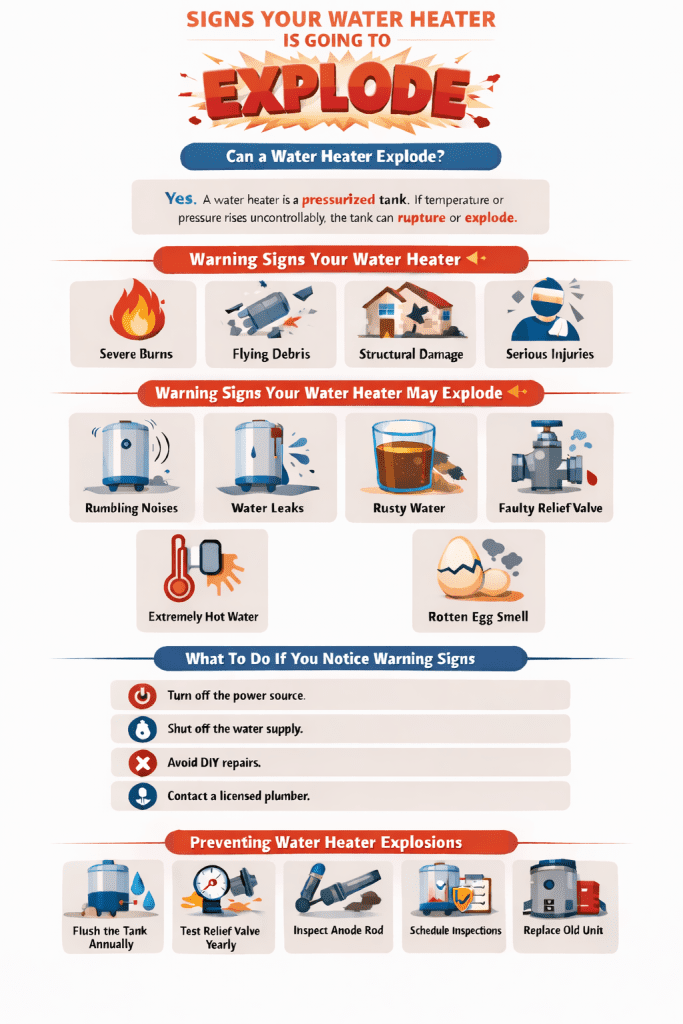
- Unusual rumbling or banging noises caused by sediment overheating inside the tank
- Water leaks around the tank that may indicate internal damage or pressure problems
- Rusty or discolored hot water, indicating corrosion inside the tank
- A faulty temperature and pressure relief valve that cannot release excess pressure
- Extremely hot water caused by a thermostat malfunction and overheating
- Rotten egg smell from hydrogen gas buildup inside the tank
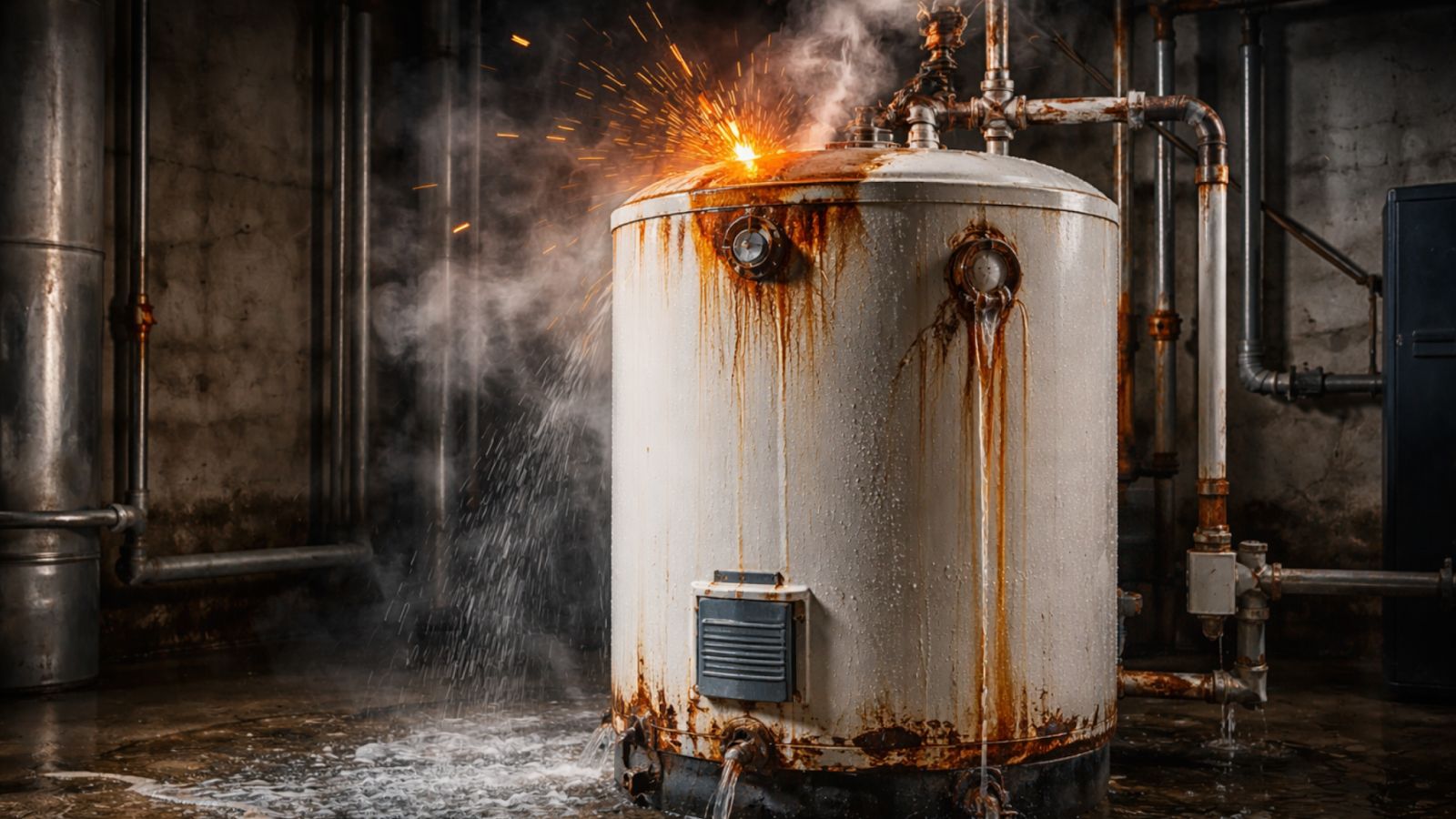
The modern water heater is a sophisticated pressure vessel that operates at a state of controlled equilibrium. What happens when this equilibrium is disrupted? Can a water heater explode? Sometimes, dangerous pressure can build up in the system, leading to an explosion.
Hot water heater explosions are uncommon but possible, making it important to understand the signs that your water heater is going to explode. It is essential for protecting your home, your property, and the people living in it.
Dangers of Heater Explosion
Dozens of gallons of water under high pressure and at very high temperatures can have severe consequences. The tank can rupture violently, and metal fragments, fittings, and other components may be propelled outward with significant force.
Water heater explosions can cause severe, life-threatening injuries, including first- to third-degree thermal burns from scalding water, deep lacerations, puncture wounds from flying debris, and blunt force trauma.
Water Heater Explosion Warning Signs
Unusual Rumbling or Banging Sounds
When the heating element warms the water, the sediment traps heat, and the water beneath the sediment begins to boil. Steam bubbles push through the sediment layer, which creates loud noises and causes overheating inside the tank.
Water Leaks Around the Tank
Small, harmless-looking leaks can be a serious warning. The common causes of leaks include:
- Internal tank corrosion
- Excess pressure
- Failing connections
- Cracks in the tank structure
Water pooling around its base indicates that the tank is weakening, and you cannot ignore it.
Rusty or Discolored Water
Brown, reddish, or metallic-smelling water indicates corrosion inside the water heater tank. Corrosion weakens the tank walls over time, making them more susceptible to cracking or bursting under pressure.
A Faulty Temperature and Pressure Relief Valve
The temperature and pressure relief valve releases excess pressure from the tank before it becomes dangerous. The following are the signs of a faulty relief valve:
- No water discharge during testing
- Continuous dripping
- Visible corrosion
- Mineral buildup around the valve
Blocked valves often lead to rapid pressure buildup. If the valve is not functioning properly, you are losing the main protection against the pressure explosion.
Extremely Hot Water
Water can suddenly become much hotter than normal due to a thermostat malfunction. Dangerously rising water temperature can lead to:
- Pressure buildup inside the tank
- Scalding risks
- Damage to internal components
Water heater temperatures should typically remain around 120°F (49°C).
Rotten Egg Smell
Bacteria reacting with the anode rod of the tank can lead to hydrogen gas buildup, causing a strong rotten egg odor. This can become dangerous in certain conditions, including:
- Poor ventilation
- Gas accumulation in plumbing lines
- Presence of an ignition source
- Very high gas concentration in enclosed spaces
Do not ignore persistent sulfur-like odors in your hot water.
What To Do If You Notice Warning Signs
If you notice any of the water heater explosion warning signs:
- Turn off the power source.
- Shut off the water supply.
- Avoid attempting major repairs yourself.
- Contact a qualified professional.
How to Prevent Water Heater Explosions
Routine maintenance is the best way to prevent water heater explosions. The following preventative measures can help extend the life of your water heater while reducing the risk of dangerous system failure.
Annual Tank Flushing
Naturally occurring minerals, such as calcium and magnesium, settle to the bottom of the tank and form a dense layer of sediment. Flushing the tank once a year helps remove this sediment before it becomes a serious problem.
Test the Pressure Relief Valve
Test the pressure relief valve at least once, preferably twice a year, to ensure it operates correctly. Place a bucket beneath the discharge pipe connected to the valve. Lift the small test lever on the valve for a few seconds and then release it. Lifting the lever leads to a burst of hot water through the discharge pipe. This means that the valve is not stuck and can release pressure when needed.
Inspect the Anode Rod
Most water heater tanks are made of steel, which naturally rusts when exposed to water and oxygen. Usually made from magnesium, aluminum, or zinc-coated aluminum, the anode rod sacrifices itself to prevent this process. Over time, the rod slowly corrodes and dissolves as it continues to protect the tank. Inspect the anode rod every one to three years.
Schedule Professional Inspections
A professional inspection provides a much deeper evaluation of the entire water heater system. A licensed plumber thoroughly inspects the thermostat, heating elements or gas burner assembly, pressure relief valve, electrical connections, gas lines, venting system, and the condition of the internal tank.
Replace Old Water Heaters
While a water heater is typically designed to last 8 to 12 years, this depends on factors such as water quality, maintenance frequency, and usage levels. As the system ages, the risk of leaks, pressure problems, and structural tank failure increases. Replace the water heater when you notice that:
- The water heater is over 10–12 years old
- Water is leaking directly from the tank
- Visible rust or corrosion on the tank body
- Repeated breakdowns or expensive repairs
- Rusty hot water caused by internal tank corrosion
- Significant loss of heating efficiency
Make sure the water heater is installed in compliance with California Plumbing Code Chapter 5.
Sketchley & Mason Plumbing is a century-old business offering top-tier water heater installation and repair.
Book Now!
Frequently Asked Questions
How long should a water heater last?
A water heater typically lasts 8 to 12 years.
How often should I flush my water heater?
Flush your water heater at least once a year to remove sediment buildup that naturally accumulates at the bottom of the tank.
Can water heaters pose safety risks?
A poorly maintained water heater or a failed critical component, such as a relief valve, can lead to problems including excessive temperature, pressure buildup, gas leaks, or corrosion, creating hazardous conditions.
What causes a water heater to explode?
A water heater can explode when excessive pressure builds up inside the tank and cannot be released safely.