Key Takeaways
|
If your drains are slow again and the plunger, the drain cleaner, and the snake have all failed you, you’ve probably heard someone mention hydro jetting. But what exactly is it? Is it the right solution for your home? And how do you know when it’s time to call in the pros?
This guide explains how hydro jetting works, when it’s recommended, and whether it’s right for your home.
After more than 100 years of serving Simi Valley homeowners, we’ve seen nearly every type of drain problem imaginable. If you’re already dealing with an active drain issue, you can explore our drain services in Simi Valley, or keep reading to understand exactly what hydro jetting involves and whether it’s right for your situation.
What Is Hydro Jetting?
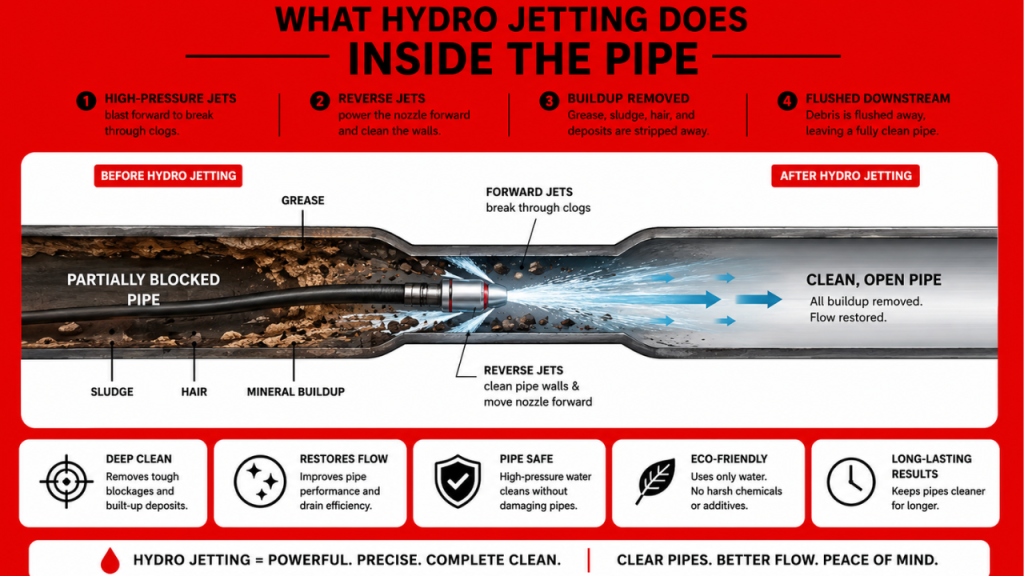
Hydro jetting is a professional drain cleaning method that uses high-pressure water up to 4000 PSI to remove grease, sludge, mineral buildup, tree roots, and other debris from inside your pipes.
Unlike a drain snake, which typically creates a path through a blockage, hydro jetting cleans the entire interior of the pipe. This helps restore proper flow and remove buildup that can lead to recurring clogs.
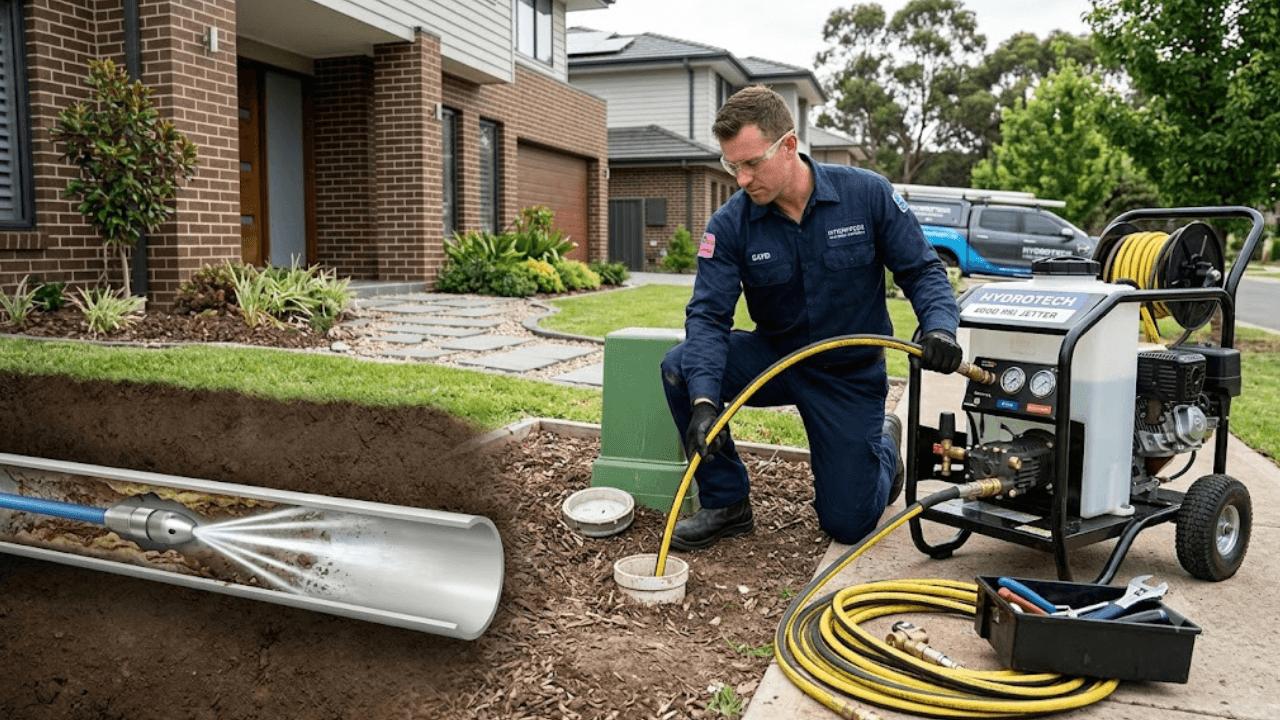
During the process, a plumber inserts a high-pressure hose into the drain or sewer line and uses high-pressure water to break apart blockages and flush debris away.
The result is a cleaner pipe and better flow; it’s a cleaner pipe and a more thorough drain cleaning solution.
How Does Hydro Jetting Work? A Step-by-Step Look
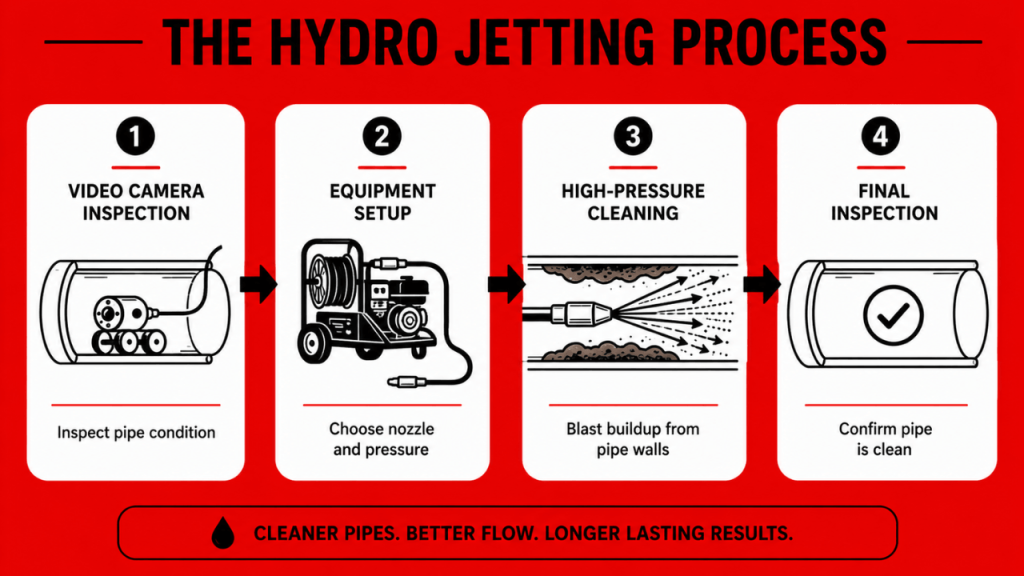
Step 1: Video Camera Inspection
Before any water enters your pipes, a licensed plumber performs a video inspection. A small camera is fed into the sewer line to locate the blockage, identify its cause, and determine whether hydro jetting is safe.
This step is essential because it helps determine whether hydro jetting can be performed safely. Old, cracked, or weakened pipes can be damaged further by 4,000 PSI of water pressure. A camera inspection tells your plumber whether jetting is safe or whether another cleaning or repair method is needed first.
Step 2: Equipment Setup
Once your plumber determines jetting is appropriate, they set up the hydro jetting machine, a unit consisting of a water tank, a high-pressure pump, a long flexible hose, and cleaning attachments. The nozzle type is selected based on your specific clog:
- A penetrator head for solid blockages
- A rotating grease head for fats, oils, and grease (FOG) buildup, or
- A specialty root-cutting nozzle for tree roots inside the pipe
Water pressure is adjusted to your pipe size and material; not every job runs at maximum PSI.
Step 3: High-Pressure Cleaning
The hose is fed into the cleanout, and the machine is activated. High-pressure water breaks apart the blockage, while backward-facing jets move the hose through the pipe and clean the pipe walls simultaneously. Gravity pulls the loosened debris downstream and out of your system.
The plumber works the hose through the pipe methodically, not just until the water flows, but until the pipe is thoroughly clean.
Step 4: Final Inspection
After jetting, your plumber will perform a follow-up check to confirm the blockage is fully cleared and the pipe walls are clean. Most residential hydro jetting jobs are completed within two hours.
What Can Hydro Jetting Remove?
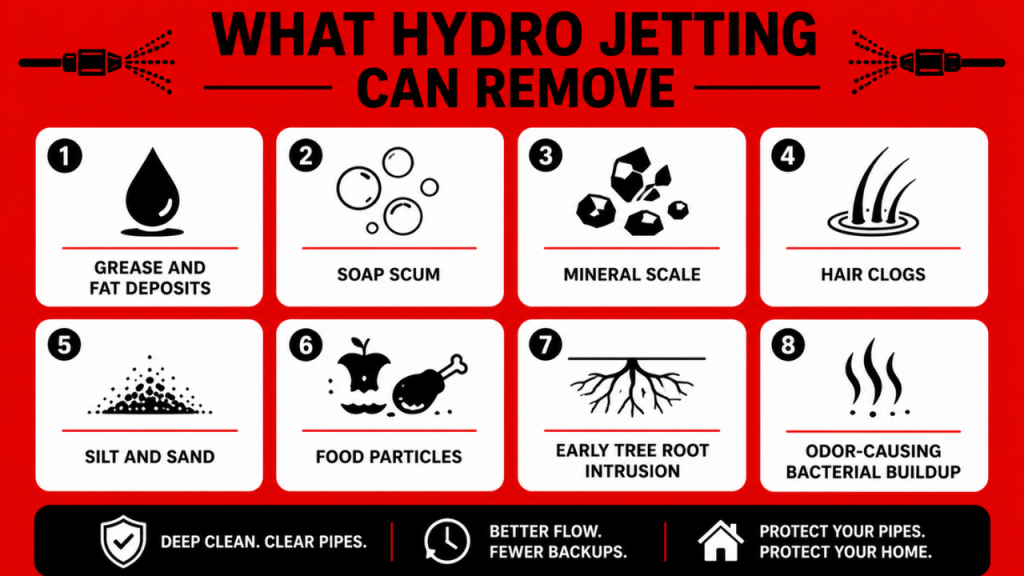
Hydro jetting can remove many types of drain and sewer line blockages, including:
- Grease and fat buildup that commonly accumulates in kitchen drains.
- Soap scum and mineral scale caused by hard water deposits on pipe walls.
- Hair clogs that frequently block bathroom sinks, tubs, and shower drains.
- Food debris that can build up over time, even in homes with garbage disposals.
- Silt and sand buildup that may collect in aging or damaged sewer lines.
- Tree root intrusion when roots are detected early and the pipe remains structurally sound.
- Bacterial and organic buildup that can contribute to persistent drain odors.
Hydro Jetting vs. Drain Snaking: What's the Difference?
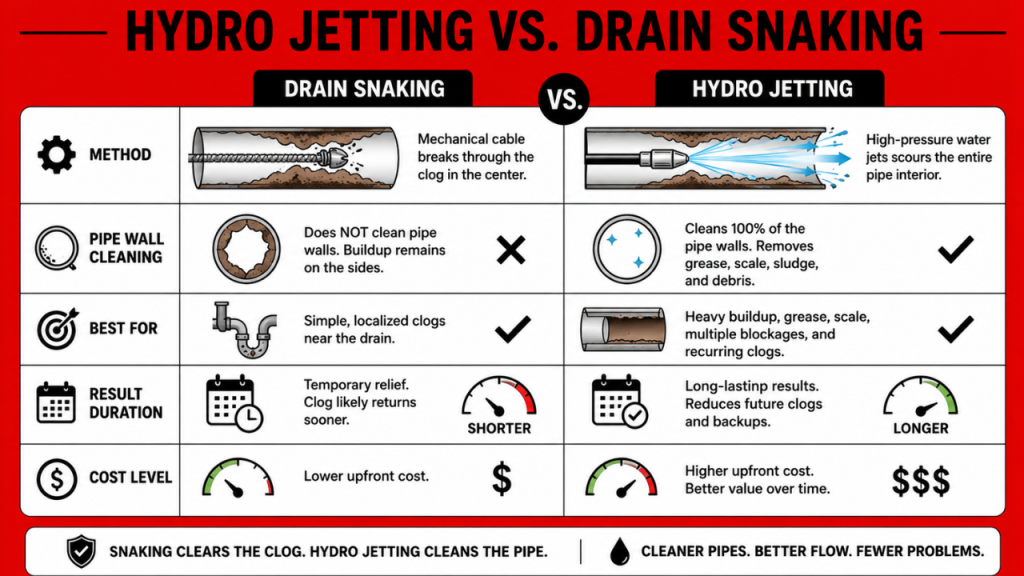
Most homeowners in Simi Valley have encountered a drain snake, the long, flexible cable that a plumber feeds into a drain to break up a clog. Snaking is fast, relatively inexpensive, and effective for simple blockages. But it has a main limitation: it punches through a clog without cleaning the pipe around it.
Here is the table showing the difference between hydro jetting and drain snaking:
Technique | Drain Snaking | Hydro Jetting |
Method | Mechanical cable breaks up the clog | High-pressure water clears and cleans |
Pipe Wall Cleaning | Minimal | Complete |
Best For | Simple clogs, older/fragile pipes | Heavy buildup, grease, recurring clogs |
Longevity of Results | Short term | Longer lasting |
Chemical Use | None | None |
Cost | Lower | Moderate-higher |
NOTE: Drain snaking works well for many clogs. However, if the same blockage keeps coming back or heavy buildup has built up inside the pipe, hydro jetting may be a more effective solution. |
7 Signs Your Drains Need Hydro Jetting
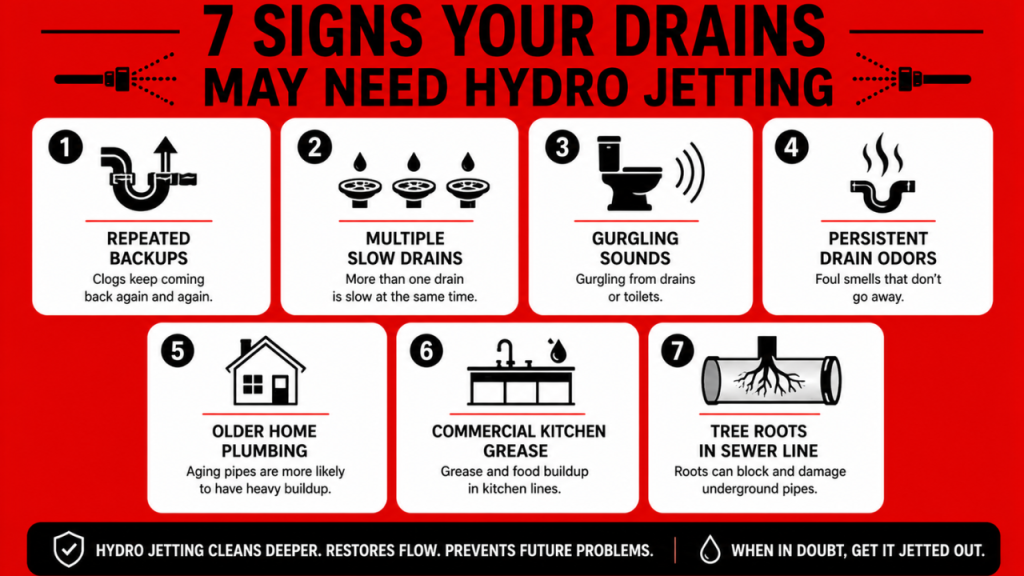
Not every slow drain needs hydro jetting. But these signs suggest your plumbing has crossed into territory where high-pressure cleaning is worth considering:
1. Your drains back up repeatedly
If you’ve had the same drain snaked two or three times in the past year, and it keeps clogging, it means you’re not clearing the root cause; you’re just managing symptoms. Recurring backups often mean that buildup on the pipe walls continuously traps debris.
2. Multiple drains are slow at once
When a single drain is slow, it’s usually a localized clog. When multiple fixtures in your home are draining slowly or backing up simultaneously, the problem is likely in your main sewer line. That’s a job for hydro jetting.
3. You hear gurgling sounds from your drains or toilet
Gurgling is the sound of air being displaced by water trying to push past a partial blockage. If you hear it coming from your toilet when you run the bathroom sink, or from a drain when you flush, your main line has a narrowing problem.
4. Your drains smell, and the smell won’t go away
A persistent sewer smell from your kitchen or bathroom drains typically means bacterial buildup has taken hold in your pipes. Drain cleaners mask it temporarily. Hydro jetting removes it.
5. You have an older home with original plumbing
Simi Valley has a wide range of housing stock, including many homes built in the 1950s through the 1970s. Pipes in homes that age accumulate decades of scale, grease, and mineral deposits. Even if you haven’t had a major backup yet, preventative hydro jetting can significantly extend the life of your plumbing system.
6. You own a restaurant or food service business
Commercial kitchen drains take an enormous amount of grease, oil, and food waste. Hydro jetting on a regular schedule, typically every six to twelve months, is the standard maintenance approach for any commercial food service operation in California.
7. Tree roots have been found in your sewer line
Simi Valley’s mature tree canopy is beautiful. The roots are less appealing. They’re drawn to moisture in sewer lines and can enter through even small cracks. If a camera inspection reveals early root intrusion and your pipe is still structurally sound, hydro jetting can clear the roots. If the damage is extensive, a more significant repair may be needed first.
When Hydro Jetting is not the Right Solution
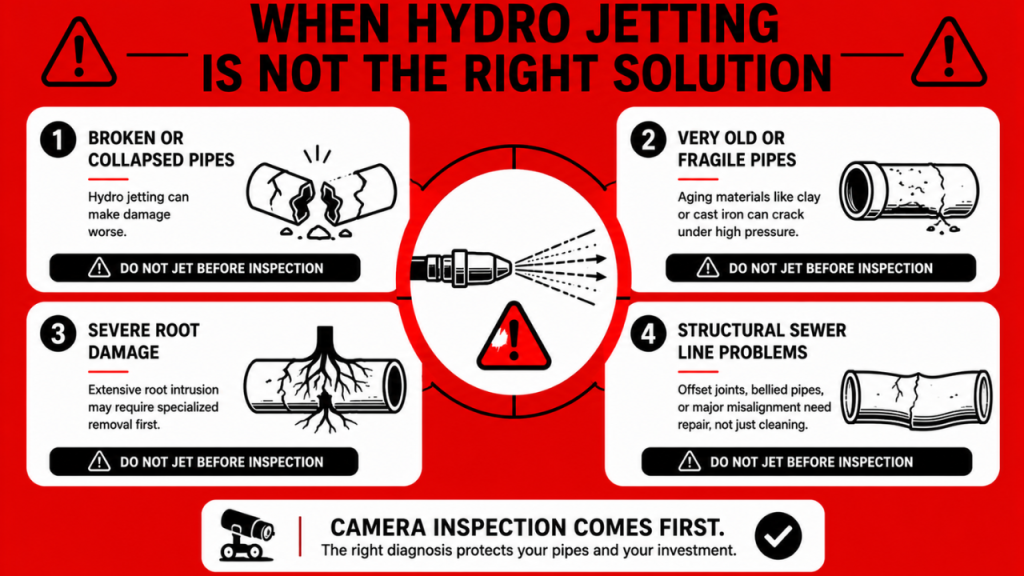
Hydro jetting is an effective drain and sewer cleaning method, but it is not suitable for every plumbing problem. According to the U.S. Environmental Protection Agency (EPA), between 23,000 and 75,000 sanitary sewer overflows occur each year in the United States. However, the causes of these problems can vary widely, from grease buildup and tree root intrusion to cracked, collapsed, or deteriorating pipes.
- Broken or collapsed pipes: Hydro jetting cleans pipes. It cannot repair them. If a sewer line has a bellied section, a crack, or a collapsed segment, hydro jetting may worsen the problem rather than solve it. This is exactly why the camera inspection comes first.
- Very old or fragile pipes: Clay pipes, severely corroded cast iron, or thin-wall PVC in poor condition may not withstand the pressure of hydro jetting. In these cases, snaking or pipe relining may be safer options.
- Severe root damage: If tree roots have significantly compromised your pipe structure, jetting the roots clean is a temporary fix at best. You’d need pipe repair or replacement, then jetting as a maintenance tool afterward.
A simple way to think about hydro jetting is that it cleans pipes rather than repairs them. It’s excellent for clean pipes that need maintenance. It won’t fix a broken pipe any more than washing a broken plate fixes the plate. The best plumbers know when to recommend it and when to recommend something else.
Benefits of Hydro Jetting
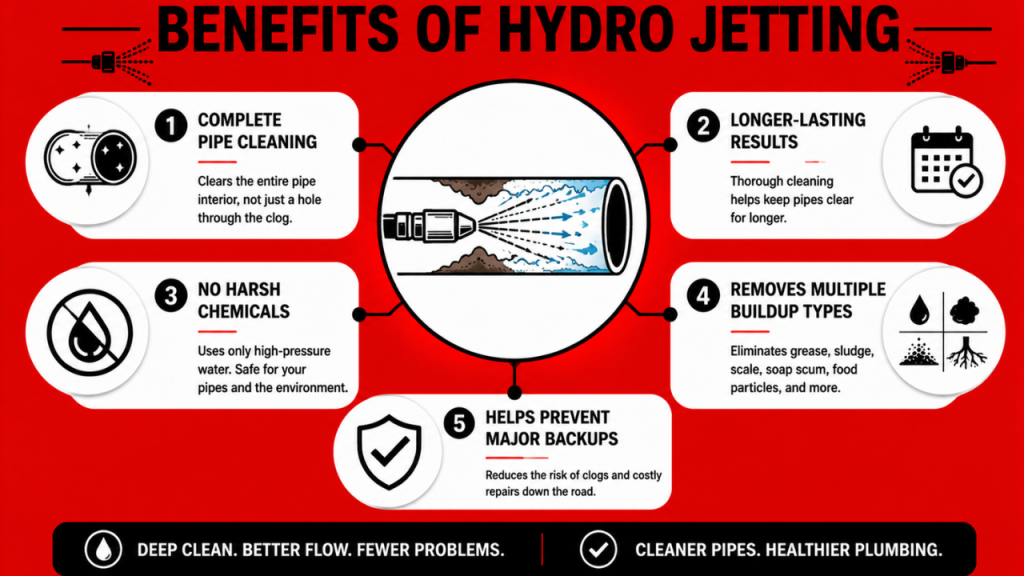
When hydro jetting is the right solution, the benefits are substantial:
- Complete pipe cleaning: Unlike snaking, hydro jetting doesn’t just restore flow; it restores pipe capacity. The buildup that’s been narrowing your pipes for years gets removed entirely.
- Longer-lasting results: Because the pipe walls are clean, debris has less to grip onto. You’ll typically go significantly longer between service calls after a hydro jetting treatment than after repeated snaking.
- No chemicals: Hydro jetting uses only water. No caustic drain cleaners, no chemical residues, no risk to your pipes from harsh solvents. It’s safe for your plumbing and the environment.
- Effective against almost everything: One method handles grease, silt, hair, scale, bacterial buildup, and tree roots (in appropriate cases). It’s the most versatile pipe cleaning tool available.
- Preventative maintenance value: Regular hydro jetting, every one to two years for residential properties, more frequently for commercial properties, can prevent the kind of major sewer backup that turns into an expensive emergency.
Is Hydro Jetting Safe for Pipes?
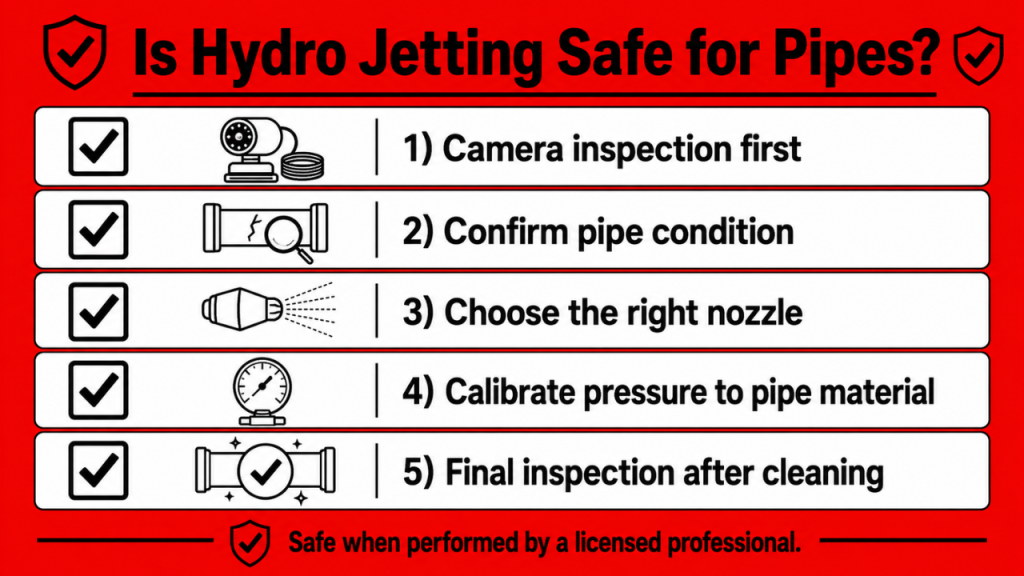
Yes, when performed by a licensed plumber who conducts a camera inspection first. The inspection step is what makes it safe. A professional identifies whether your pipes can handle the pressure before any jetting begins. If the pipes are not suitable for hydro jetting, another cleaning or repair method may be recommended.
This is also why hydro jetting is not a DIY project. The equipment is powerful, the pressure is significant, and misuse can cause serious pipe damage. It requires professional training, the right nozzle selection for your specific clog type, and accurate pressure calibration for your pipe material and diameter.
Why Professional Hydro Jetting Matters
Choosing an experienced plumbing company is just as important as choosing the right drain cleaning method.
Sketchley & Mason has served Simi Valley since 1921 and has extensive experience diagnosing and resolving drain and sewer line problems.
Before recommending hydro jetting, our technicians inspect the line to identify the cause and condition of the blockage. This helps ensure the right solution is used for your plumbing system.
If you’re dealing with slow drains, recurring clogs, gurgling sounds, or persistent odors, contact us before a minor issue becomes a major backup.
Schedule an inspection online. Same-day service is available for urgent drain issues throughout Simi Valley.
Frequently Asked Questions
No. Hydro jetting requires professional equipment, training, and a pre-service camera inspection to confirm your pipes can safely handle the pressure. DIY attempts with consumer pressure washers can damage pipes and create bigger problems than the original clog.
The cost of hydro jetting varies depending on factors such as the location and severity of the blockage, the condition of the pipe, and the size of the drain or sewer line. A professional inspection can help determine the scope of work and the most appropriate solution for your plumbing system.
Hydro jetting requires specialized equipment, including the jetting machine, a range of precision nozzles, and a camera inspection system, as well as professional training to operate safely. The higher upfront cost is often offset by longer-lasting results and fewer repeat service calls.
For most residential properties, hydro jetting results last one to three years, depending on your household's usage patterns, pipe age, and what caused the original buildup. For preventative maintenance, annual or biannual jetting is recommended. Commercial properties with high grease output may need it every six to twelve months.
The main limitations are pipe condition and cost. Very old, cracked, or structurally compromised pipes may not withstand hydro jetting pressure. It also costs more than a standard snake job. And it won't fix underlying structural problems. Bellied pipes, collapsed lines, and extensive root damage require repair, not just cleaning.
Yes, in cases where root intrusion is early, and the pipe is otherwise intact. Hydro jetting can cut through and flush out roots effectively. However, if roots have caused structural damage to the pipe, the pipe must be repaired first. Jetting alone will not solve the problem.
In oil and gas, hydro jetting refers to high-pressure water cutting used in industrial pipe maintenance and trenchless pipe rehabilitation, a different application from residential or commercial plumbing. In the plumbing context, hydro jetting specifically refers to sewer and drain cleaning.
For preventative maintenance, once every one to two years is typical for most residential properties. If you've had recurring clogs or you're in an older home, annual jetting may be warranted. Your plumber can give a specific recommendation after a camera inspection.
They refer to the same process. "Water jetting," "hydro jetting," "hydrojet plumbing," and "jetting plumbing" are all terms used to describe high-pressure water cleaning of drain and sewer lines. The terminology varies by region and provider.