| Quick answer: A severely blocked drain needs mechanical methods first — a drain snake, P-trap cleaning, or wet/dry vacuum. Chemical solutions only help with light buildup; they rarely touch a clog that’s deep in the pipe. This guide covers kitchen sinks, bathroom drains, showers, and outside drains. |
In real-world plumbing, severe blockages behave completely differently from a slow-draining sink. A minor clog might clear with hot water. A severe one can back up into multiple fixtures simultaneously, pointing to a much deeper problem in your system. Knowing which method to use — and when to stop trying DIY — is what this guide is for.
What Causes a Severely Blocked Drain?
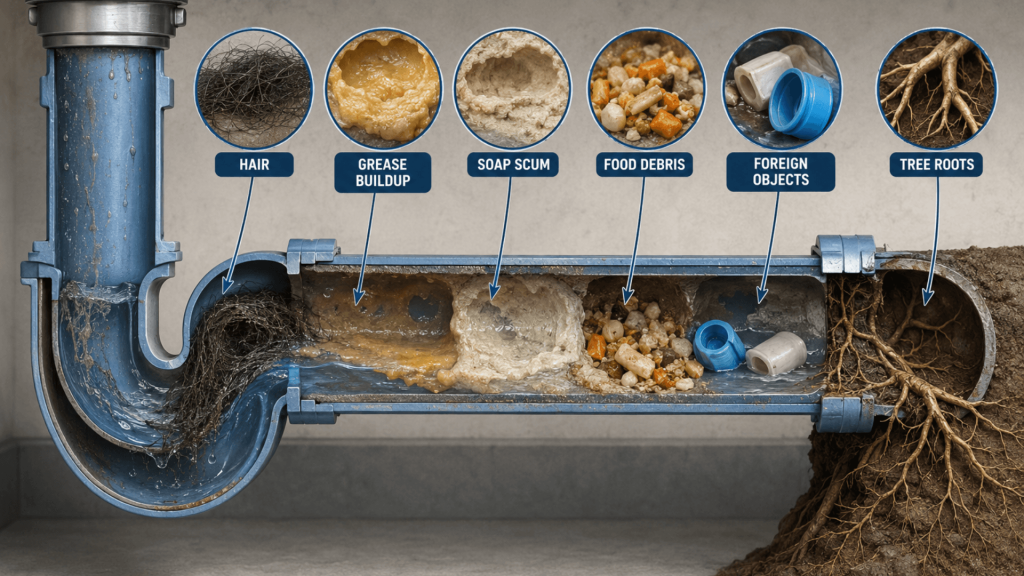
Understanding the root cause is the first step to fixing it properly. The most common culprits are:
- Hair buildup — the leading cause of blocked bathroom and shower drains. Hair binds with soap scum to create a dense, tangled mass sitting deep in the pipe.
- Grease and oil solidification — cooking fats poured down a kitchen sink cool and harden layer by layer over time.
- Soap scum accumulation — bar soap leaves a waxy residue that gradually narrows pipes.
- Food waste and debris — small food particles that pass through strainers and accumulate in the drain.
- Foreign objects — cotton pads, wipes, or small items that should never enter a drain.
- Tree root intrusion — for outside drains and main sewer lines, roots can crack and grow into pipes, causing full blockages that no home remedy will fix.
These are the exact reasons why a clogged drain deep in the pipe so rarely responds to store-bought chemical cleaners alone.
Signs You Have a Severely Blocked Drain
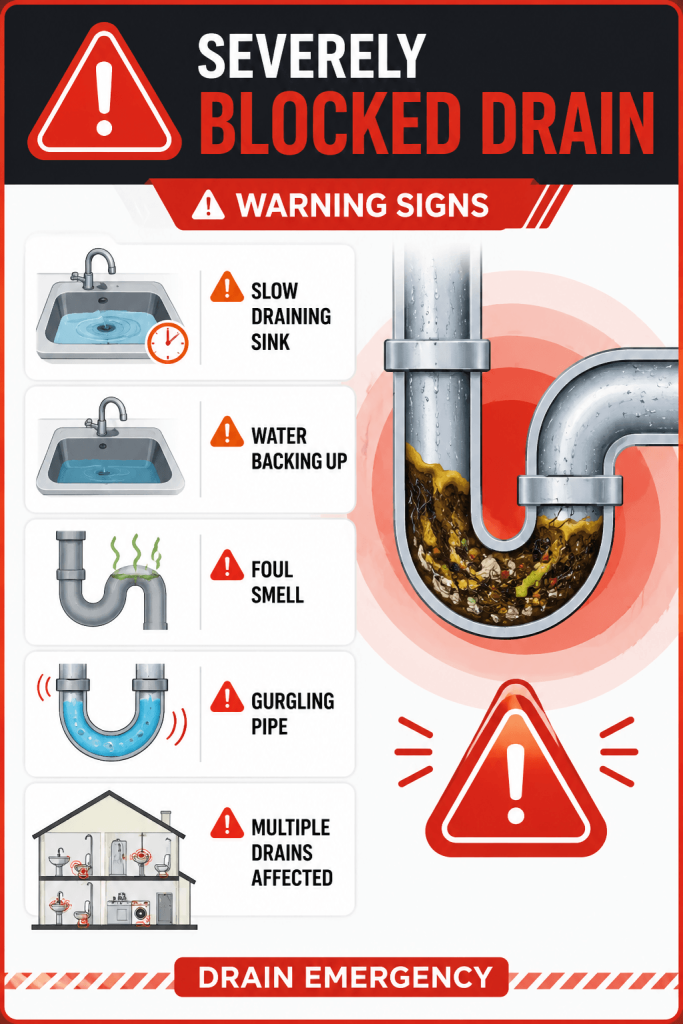
Not sure if it’s a minor clog or a serious blockage? Watch for these warning signs:
- Water is backing up in the sink, shower, or tub
- Slow draining even after multiple DIY attempts
- Gurgling sounds from your drain or toilet
- A foul sewer smell is coming from the drain
- Multiple fixtures are draining slowly at the same time
- Overflow in your outside drain or gully
- Standing water that simply won’t clear
If you’re seeing three or more of these signs together, the blockage is likely severe — and possibly affecting your main sewer line.
What are the Most Effective Methods to Unclog the Drain?
Here are the 2 most effective ways to unclog your severely blocked drains:
Mechanical Methods
Mechanical methods should always be your first move against a severely blocked drain. Do not start with chemicals.
1. Drain snake/auger — the most important method
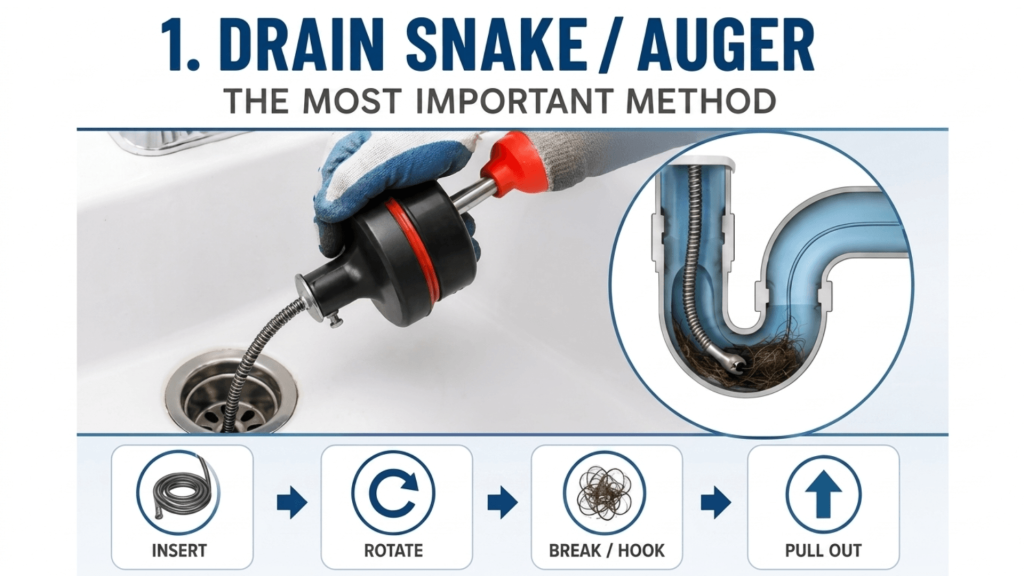
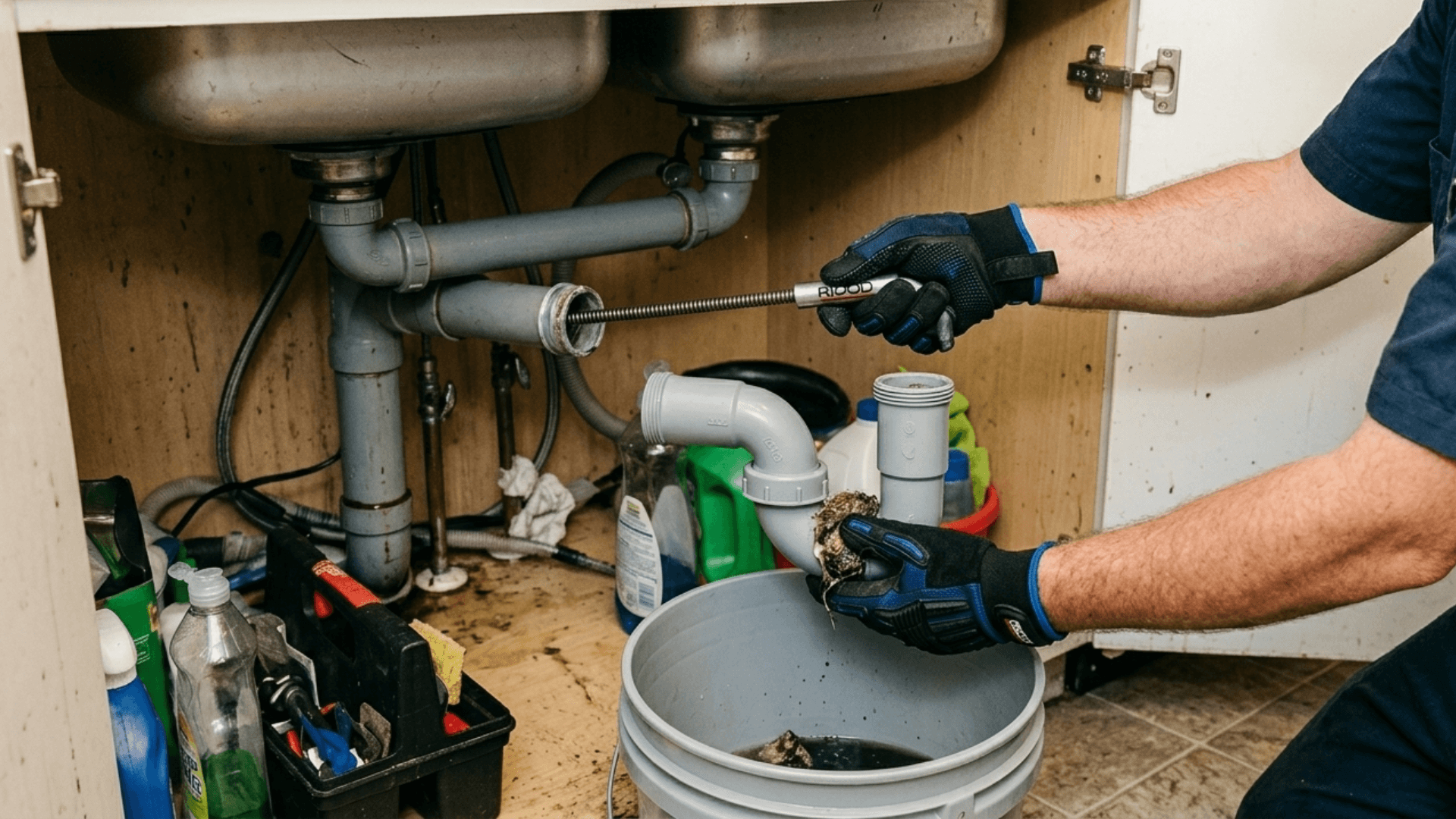
A drain snake (auger) is the single most effective tool for clearing a clog deep in the pipe. It works by physically breaking apart the blockage or hooking onto it and pulling it free. Insert the cable into the drain until you feel resistance — that’s your clog. Rotate the handle clockwise to hook or break it apart, then pull the debris out. A 25-foot sink auger handles most household blockages. Best for hair clogs and solid blockages sitting deep in the pipe.
2. P-trap removal — sink blockage fix
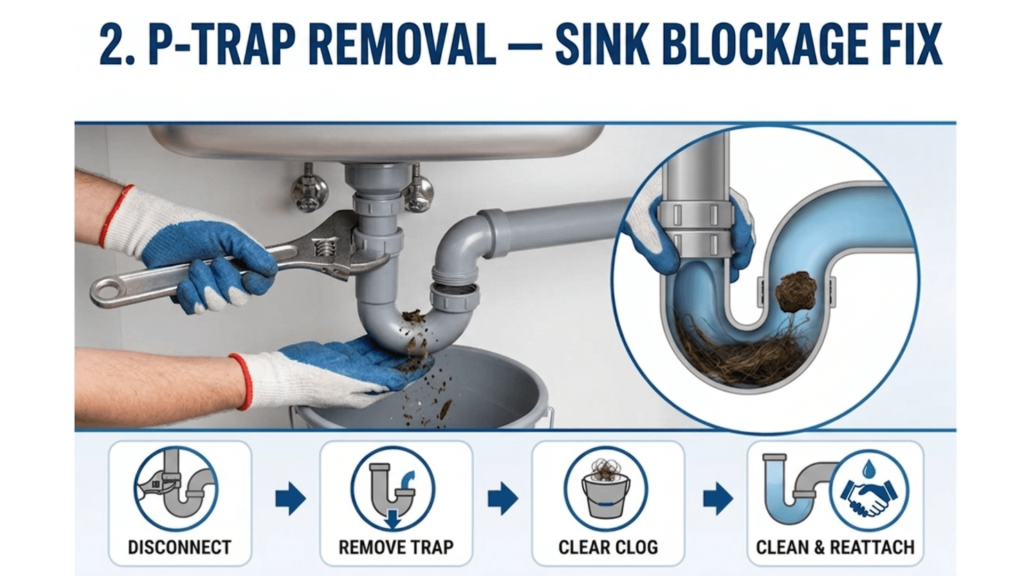
The P-trap is the U-shaped pipe under your sink and one of the most common spots for grease and debris to collect. Place a bucket underneath before you start — there will be water inside. Unscrew the slip nuts by hand or with channel-lock pliers, remove the pipe, and clean out the buildup manually. Reattach firmly and run water to confirm the blockage is gone.
3. Wet/dry vacuum method
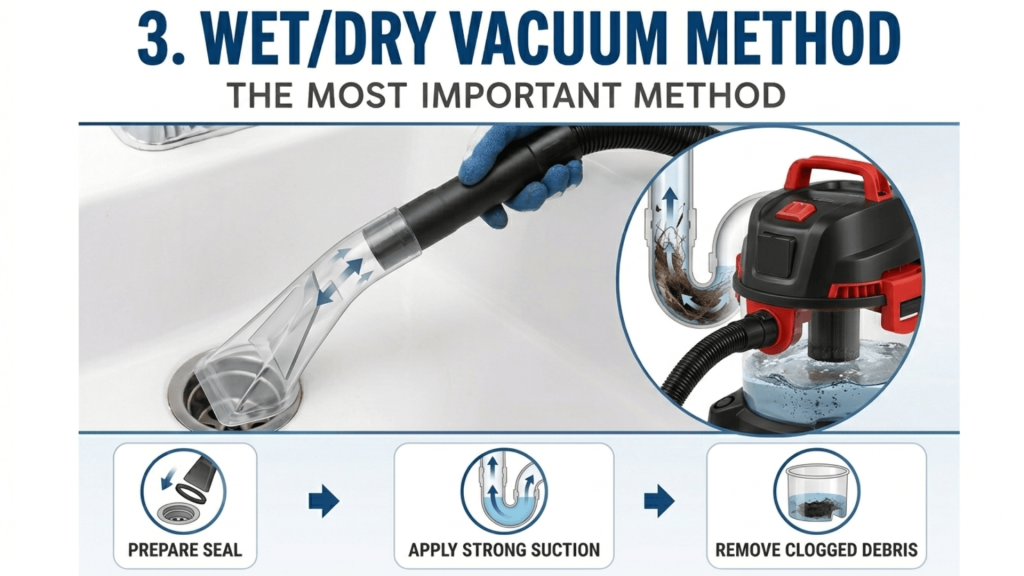
A wet/dry shop vacuum set to liquid mode can suction loose debris directly from a drain. Seal the hose opening tightly over the drain and run it for 30–60 seconds. This works best for shallow clogs or where debris is loose and not yet compacted deep in the pipe.
4. Plunger method — pressure clearing
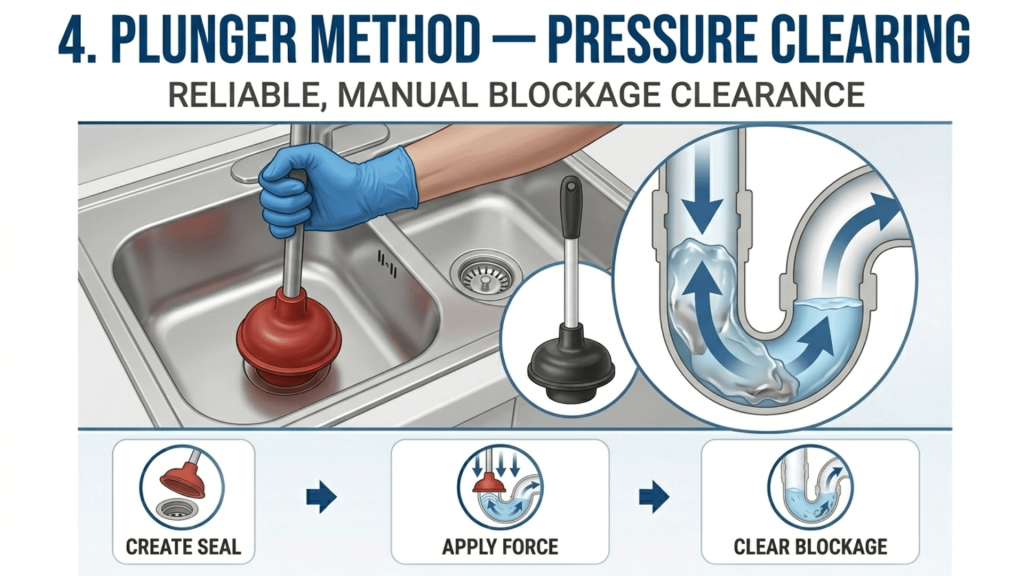
For soft blockages, a plunger still works — but only when used correctly. Block the overflow hole with a wet cloth to focus the suction pressure. Submerge the cup fully in water and pump vigorously up and down for 15–30 seconds. Best for soft food or waste blockages, not solid or hair-based ones.
5. Drain bladder — main line blockage
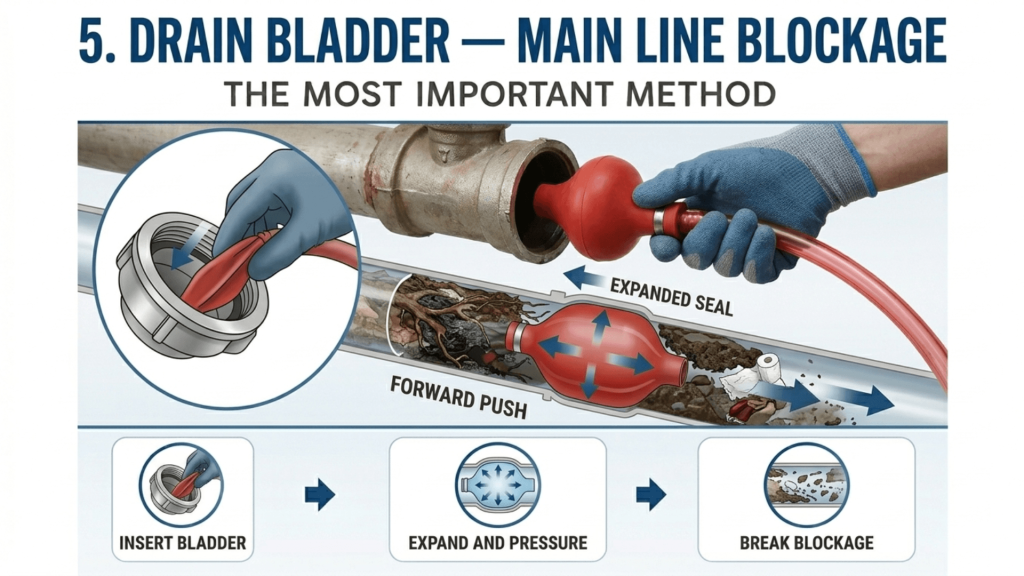
A drain bladder attaches to a garden hose, inflates inside the pipe, then releases high-pressure water pulses to break through severe main line blockages. This is how professionals tackle outside drain overflow and main sewer line clogs. It’s not a typical DIY tool — but understanding when your plumber uses it helps you know when you’ve reached that stage.
Natural & Chemical Solutions
These methods work for light buildup and mild clogs — not for a truly severe blockage.
1. Baking soda + vinegar method
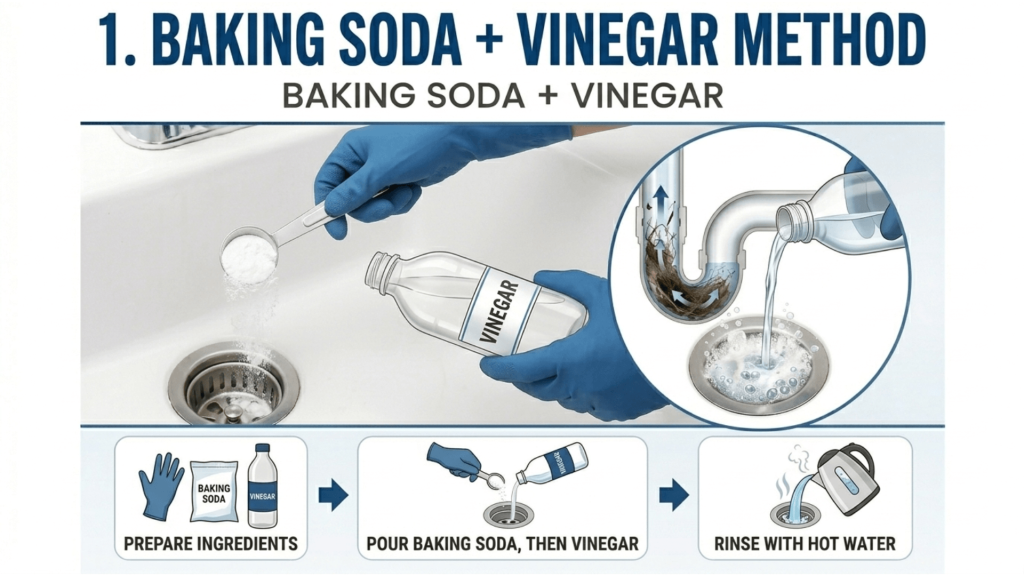
Pour ½ cup of baking soda and ½ cup of salt into the drain, followed by 2 cups of vinegar. Let the fizzing reaction work for 15–60 minutes, then flush with boiling water. This works on light soap scum and mild organic buildup — it won’t shift a solid blockage.
2. Boiling water + dish soap
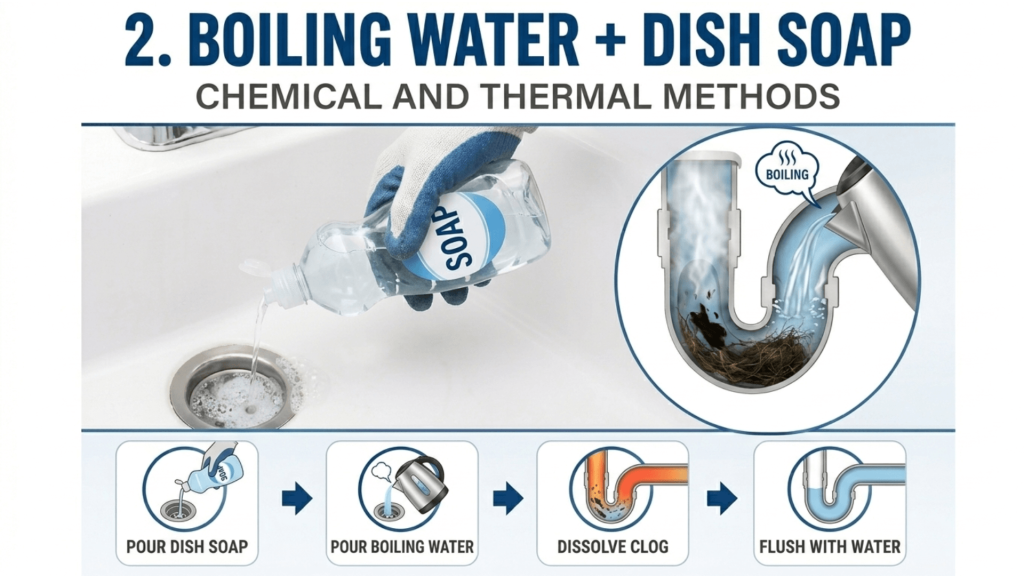
Squirt a generous amount of grease-cutting dish soap down the drain and follow with several pots of near-boiling water. Effective for grease-based kitchen sink clogs.
Caution: Do not use boiling water in PVC pipes — it can warp or crack the plastic. Use very hot tap water instead.
Related Read: Complete Kitchen Sink Plumbing Guide: Common Problems & Pro Tips
3. Enzyme cleaners — safe long-term option
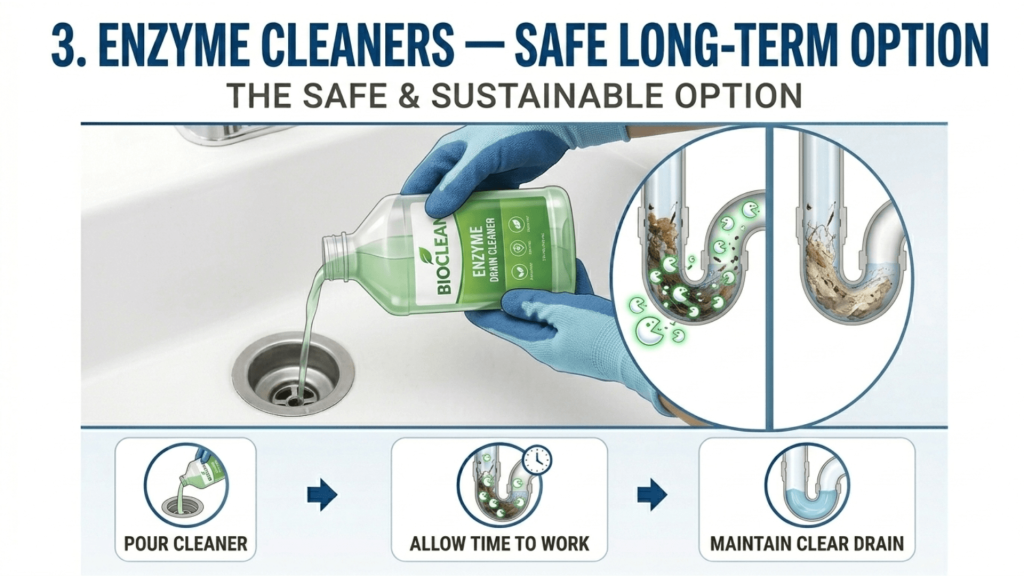
Enzyme-based drain cleaners break down organic waste like hair, grease, and food particles at a biological level. Slower to act but far safer for your pipes and septic system. Ideal as a monthly maintenance step to prevent recurring blockage before it becomes a severe clog.
Clog Type VS Best Fix
| Clog Type | Symptoms | Best Method | Avoid |
| Hair clog | Slow shower drain | Drain snake | Chemical cleaners |
| Grease clog | Kitchen backup | Hot water + soap | Boiling PVC pipes |
| Soap scum | Slow sink drain | Vinegar solution | Strong acids |
| Deep pipe clog | Multiple drains affected | Auger/plumber | DIY chemicals |
| Tree root clog | Outdoor overflow | Professional jetting | Home remedies |
Mistakes that Make a Blocked Drain Worse
These are the errors we see most often — and every one of them turns a fixable problem into a bigger one:
- Mixing chemical drain cleaners — different products can react and create toxic fumes or cause serious pipe damage.
- Ignoring early slow drainage — a slow drain is a warning sign. Left alone, it becomes a full blockage.
- Using boiling water in plastic pipes — PVC can warp, which creates a brand-new problem on top of the original clog.
- Forcing objects deeper into the drain — without the right tool, you push the blockage further down the line.
- Plunging after a chemical cleaner — if a chemical hasn’t worked and you plunge, caustic liquid can splash back and cause serious burns.
When DIY Methods Don’t Work
If you’ve worked through a drain snake, P-trap cleaning, and natural solutions, and the drain is still blocked, it’s time to call a professional plumber. Here are the signs that tell you DIY has reached its limit:
- The same drain keeps blocking repeatedly
- You can smell sewer gas from the drain or garden
- Water is coming back up through another fixture
- Multiple drains in the house are affected simultaneously
- Your outside drain is overflowing with no obvious cause
- No improvement after using a snake or plunger
These symptoms often point to a deeper issue — a collapsed pipe, root intrusion, or a main sewer line blockage that requires professional hydro-jetting to resolve safely.
Final thoughts
If your drain is still blocked after trying these methods, it may indicate a deeper issue in your plumbing system that no DIY fix can reach.
For safe, fast, and professional drain unblocking, Sketchley & Mason Plumbing is here to help — expert service you can rely on.
FAQs
How to unblock a seriously blocked drain?
Start with a drain snake to physically break or hook the clog, then try P-trap removal if it’s under a sink. Avoid chemicals for severe blockages — they rarely penetrate and can damage pipes.
What do I do if I can’t clear a clogged drain?
If mechanical methods haven’t worked, the blockage is likely deep in your main sewer line. Call a professional plumber who can use hydro-jetting to clear it safely.
Can baking soda and vinegar unclog a drain?
Yes — but only for light buildup or mild clogs. It won’t clear a severe blockage caused by hair, solid debris, or a clog deep in the pipe.
Why does my drain keep getting blocked?
Recurring blockages usually mean a partial obstruction was never fully cleared, or there’s a structural issue like pipe damage or tree root intrusion.
How do plumbers clear severe drain blockages?
Plumbers use drain augers for moderate clogs and hydro-jetting for severe or main line blockages — both physically remove the blockage rather than attempting to dissolve it.