Key Takeaways
|
If your toilet has started making a strange bubbling or gurgling noise, you’re probably wondering if it’s something minor or something you should be worried about.
Fair question.
In most Simi Valley homes, that sound is trapped air working its way out through the water in your toilet bowl, usually because something is blocking normal drainage or airflow elsewhere in the system. Sometimes it’s as simple as a small clog. Other times, it’s an early sign of a vent, sewer, or septic issue that’s worth catching before it turns into a bigger repair.
We’ve been diagnosing plumbing noises like this in Simi Valley homes since 1921, so we know the difference between a quick fix and a warning sign. Below, we’ll walk you through the most common causes, help you figure out which one applies to your home, and cover the easy fixes worth trying before you pick up the phone.
Why Is My Toilet Gurgling or Bubbling?
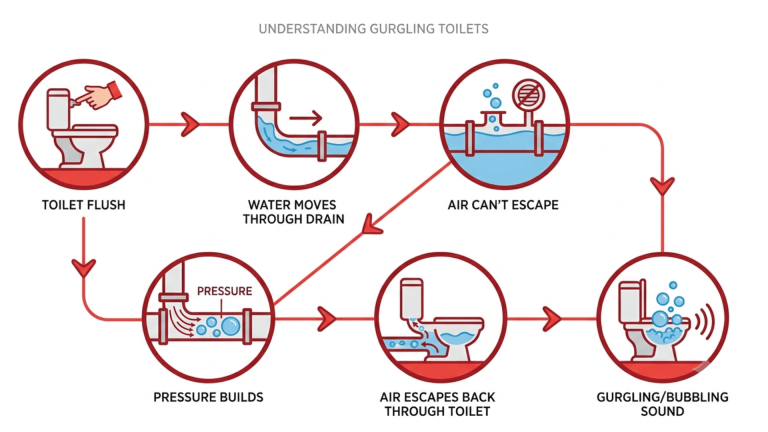
Your plumbing system relies on a simple balance: water flows down through your drain lines while air moves freely through your vent stack, keeping pressure equalized throughout the house. When that balance is disrupted, whether by a clog, a blocked vent, or a sewer obstruction, air gets pushed backward and forces its way out through the closest opening. That’s usually your toilet.
The noise itself isn’t dangerous. What’s causing it might be.
Quick Diagnosis: What Your Toilet's Symptoms Could Mean
Before you troubleshoot, it helps to know what you’re dealing with. Match your symptom to the likely cause below.
If you notice… | It’s most likely… |
Toilet bubbles after flushing | A partial clog |
Toilet gurgles but isn’t clogged | A vent stack issue |
Toilet bubbles when the shower runs | A shared drain or sewer blockage |
Toilet gurgles when the washing machine drains | A shared drain line issue |
Multiple drains gurgle at once | A main sewer blockage |
Slow drains throughout the house | A sewer line or septic problem |
Common Plumbing Causes of Toilet Gurgling
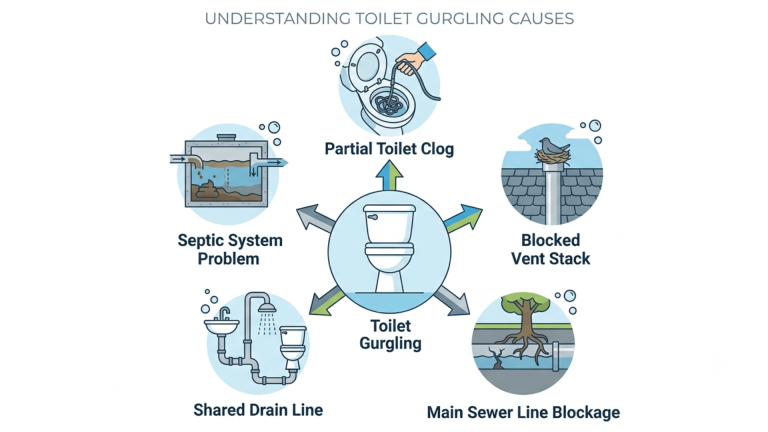
Most gurgling toilets trace back to something disrupting the normal flow of water or air in your plumbing. Here are the four culprits we see most often in Simi Valley homes.
Partial Toilet Clog
Toilet paper or waste stuck in the trap traps air underneath the water. When you flush, that air has to escape somewhere, and you hear it as bubbling.
Blocked Plumbing Vent Stack
The vent stack running through your roof keeps air pressure balanced throughout your plumbing. Leaves, debris, or a bird’s nest can block it, pulling air out through your toilet instead.
Main Sewer Line Blockage
If your toilet gurgles at the same time as other fixtures, the problem is likely further down the line. Tree roots, grease buildup, and collapsed pipes are common causes, especially in older Simi Valley homes.
Related Read: How to Protect Your Pipes from Tree Roots — If your gurgling is tied to a main sewer line blockage, tree roots are one of the most common causes in older Simi Valley homes. |
Shared Drain Line Issues
Many homes route the toilet, shower, and washing machine through the same drain line. When one fixture drains, it can push air out through the toilet, so the gurgling seems to happen “on cue.”
Septic Issues That Can Cause a Gurgling Toilet
If your home runs on a septic system, gurgling can mean something a little different.
Cause | What’s Happening |
Full septic tank | Solids have built up, slowing drainage and pushing air back through your pipes |
Saturated drainfield | Heavy rain or poor drainage keeps the soil from absorbing wastewater properly |
Blocked inlet pipe | Sludge has built up where your main line meets the tank, restricting flow |
Your septic tank’s job is to hold wastewater long enough for solids to settle at the bottom as sludge while oils and grease rise to the top as scum. When that process gets disrupted, your plumbing is usually the first place it shows up. For more on how these systems work, the U.S. Environmental Protection Agency has a clear overview of septic system function.
Tip: Septic-related gurgling often comes with slow drains, sewer odors, or soggy patches near the drainfield. If you’re noticing those together, it’s worth a closer look. |
Easy Fixes You Can Try First
Before assuming the worst, these steps are safe to try on your own:
Use a flange plunger
It creates a tighter seal than a flat sink plunger and works better for toilet clogs.
Try a toilet auger
If plunging doesn’t clear it, an auger reaches further into the trap to break up deeper blockages.
Clean the rim jets
Mineral buildup under the rim can weaken your flush over time. A wire brush or old toothbrush usually does the trick.
Check the roof vent, if it’s safe to do so
Look for leaves, debris, or nests blocking the opening. If you’re not comfortable getting on the roof, that’s a job worth leaving to a professional.
→ Avoid chemical drain cleaners. They rarely solve vent or sewer-related gurgling, and on older pipes, they can do more harm than good.
When DIY Isn't Enough
Some causes go beyond what a plunger or auger can fix. Call a plumber if you notice:
- Gurgling from more than one drain
- A sewer smell inside or outside your home
- Water backing up into tubs, showers, or sinks
- Gurgling that continues after trying the fixes above
- Signs pointing to a sewer line or septic issue
These are usually signs that the problem sits deeper in your system, and DIY attempts at that point can sometimes make things worse.
Need a Second Opinion? We're Here for It.
If the gurgling doesn’t clear up, or you suspect something bigger is going on, Sketchley & Mason Plumbing has been solving these exact problems for Simi Valley homeowners for over a century. Whether it’s a stubborn clog, a blocked vent, or a septic system that needs a closer look, we’ll help you get to the bottom of it, day or night.
Frequently Asked Questions
A gurgling toilet with a septic system often indicates a full tank, a saturated drainfield, or a blocked inlet pipe. These issues restrict wastewater flow and force trapped air back through the toilet.
If only one toilet is affected, the problem is usually a localized clog or a nearby vent issue. It is less likely to be a main sewer line problem.
Not always, but a full septic tank is one of the most common causes of toilet gurgling. Other signs may include slow drains, foul odors, or wastewater backing up.
Not necessarily, but it can be a sign if multiple drains are gurgling or sewage odors are present. A professional inspection can confirm whether the sewer line is damaged.
Minor clogs can often be cleared with a plunger or toilet auger. If the gurgling continues or affects multiple fixtures, it's best to call a plumber
A blocked plumbing vent stack can create pressure problems that cause gurgling even when the drain isn't clogged. This prevents air from flowing properly through the plumbing system.
Sometimes a temporary air pocket may clear on its own, but ongoing gurgling usually points to an underlying plumbing issue. If it keeps happening, have it inspected before it gets worse.