Key Takeaways
|
Imagine this: you’ve just come home after a long, exhausting day and want a refreshing shower, or you’ve a mountain of chores, and you start with dishes to quickly finish your work. But instead of a strong, steady stream of water, you’re met with a weak trickle. Sounds familiar? Well, you are not alone. About 6% of homeowners in the U.S. deal with low water pressure.
When water flows from your taps, showers, or appliances with less force than normal, even simple chores feel like a struggle. Low water pressure isn’t just inconvenient—it impacts your entire household system:
- Weak shower flow makes bathing uncomfortable and less effective
- Dishwashing becomes time-consuming and inefficient
- Sinks and taps take longer to fill buckets or wash items
- Washing machines and dishwashers may not function properly
- Garden sprinklers fail to reach the required areas
- Overall water usage becomes inefficient and frustrating
However, the good news is that it is fixable. Low water pressure can be due to various reasons, ranging from simple fixes (like a partially closed valve) to complex problems (like pipe corrosion). Understanding the root causes of low water pressure is the first step toward fixing the problem.
What Causes Low Water Pressure and How to Fix It?
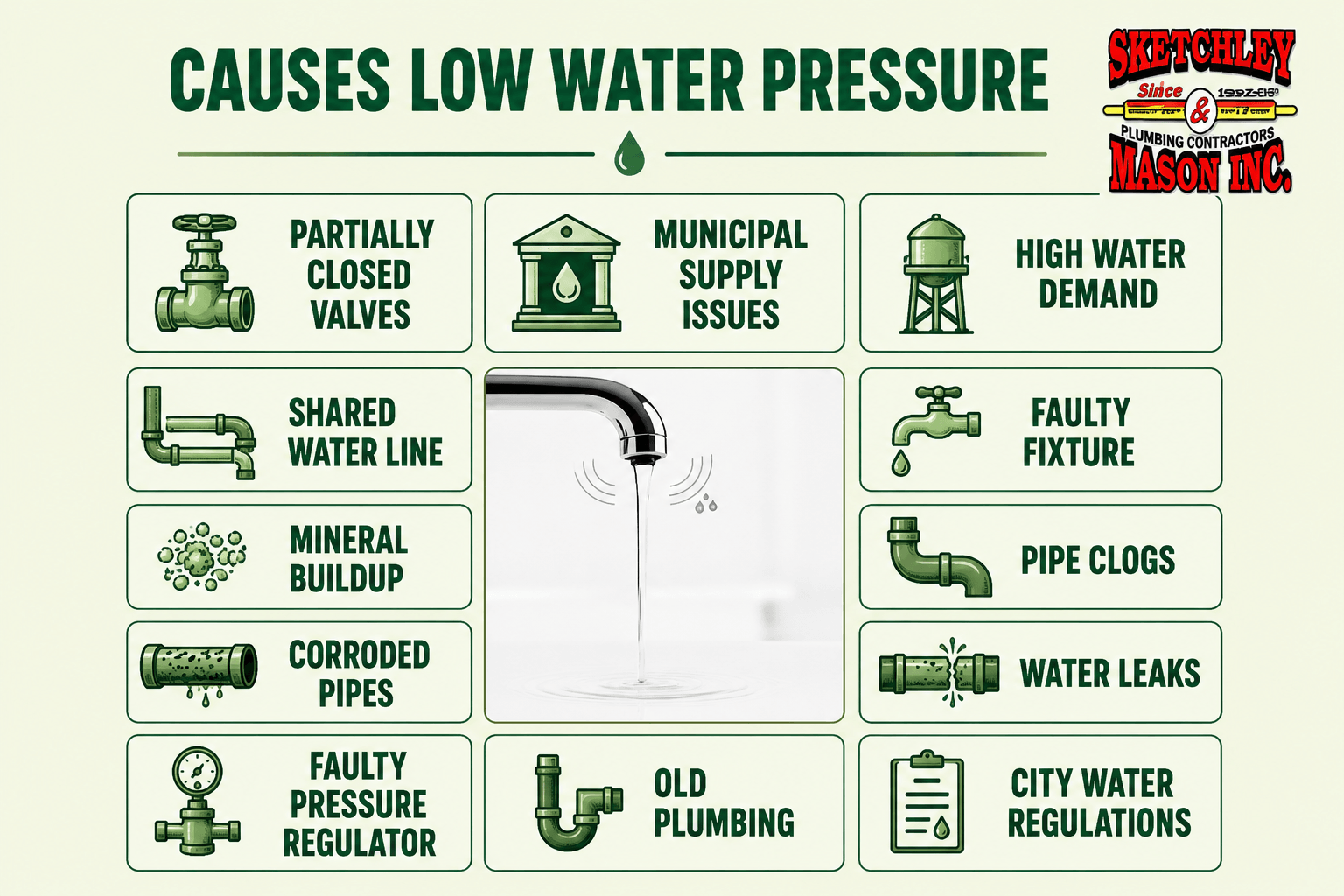
Sr.No. | Cause | Where It Affects | How to Identify |
1 | Partially Closed Valves | Whole house | Check valves first |
2 | Municipal Water Supply Issues | Whole house | Neighbors affected too |
3 | High Water Demand | Whole house | Only when multiple fixtures are running |
4 | Shared Water Line | Whole house | Pressure drops when neighbors use water |
5 | Faulty Fixture | 1–2 locations | Only one faucet/shower is affected |
6 | Mineral Buildup | Gradual, whole house | White deposits on fixtures |
7 | Pipe Clogs | Sudden, localized | Sudden pressure drop |
8 | Corroded Pipes | Gradual, whole house | Old home, rust-colored water |
9 | Water Leaks | Whole house or localized | Wet spots, high water bill |
10 | Faulty Pressure Regulator | Whole house | Inconsistent pressure, age >10 years |
11 | Old Plumbing | Whole house | Home built before 1960, galvanized pipes |
12 | City Water Regulations | Whole neighborhood | Utility company confirms pressure reduction |
Partially Closed Valves
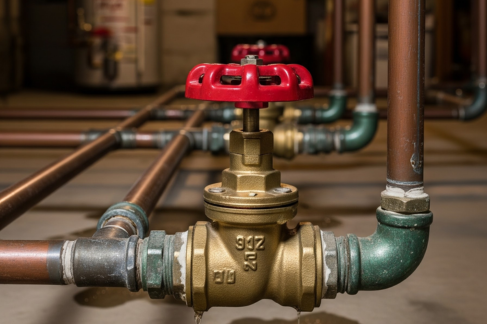
Not all water pressure problems come from serious plumbing damage. Sometimes, the issue is as simple as a valve that isn’t fully open. Consider valves as “control gates” for water flow. When they are fully open, water moves freely. But if even one valve is slightly closed, it restricts the flow and reduces pressure throughout the house.
Where These Valves Are Located
There are usually a few key valves in a home:
- Main shut-off valve (controls water supply to the entire house)
- Meter valve (located near the water meter, often outside)
- Individual fixture valves (under sinks, behind toilets, near appliances)
- Water tank inlet valve (if you use a storage system)
Why This Happens
A valve may be partially closed due to:
- Recent plumbing repair has not been reopened fully
- Accidental bumping or turning
- Old or stiff valves that don’t open smoothly
- Seasonal maintenance work by water authorities
- Sediment buildup inside the valve mechanism
How to Identify It
You may suspect a partially closed valve if:
- Pressure dropped suddenly across the whole house
- All taps show weak flow equally
- No visible leaks or pipe damage
- If you’re facing a low water pressure issue in your area
- The issue started after plumbing work or maintenance
How to Fix It
You can inspect it safely:
- Locate the main shut-off valve
- Turn it fully counterclockwise (for most valve types)
- Ensure it is completely open, not halfway
- Check other accessible valves under sinks or near appliances
Time to fix: 5 minutes | Difficulty: Easy | Cost: Free
Pro Tip: If opening the valve improves pressure even slightly, that’s a strong sign the valve was the issue. In older homes, replacing stiff or worn-out valves often restores full flow permanently.
Municipal Water Supply Issues
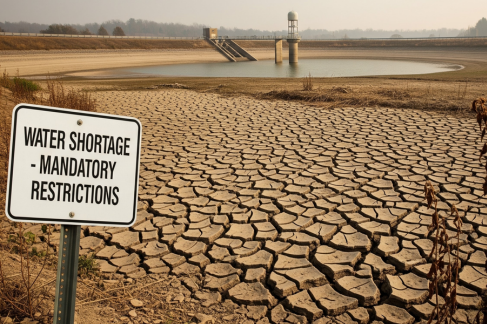
Sometimes, the problem isn’t inside your home at all. You could have perfectly healthy pipes, clean fixtures, and fully open valves—and still experience weak water pressure. That’s because your city or water utility company controls the water pressure entering your neighborhood. Sometimes they reduce pressure due to supply problems, maintenance, or emergencies.
One first-time homeowner on Reddit discovered this the hard way when they woke up to find their entire home had virtually no water pressure. Everything from sinks to showers suddenly started as a weak trickle and dwindled to nothing over 20 seconds. Despite owning a 1978 home with no prior water system issues, they feared an expensive plumbing problem. However, after checking with neighbors and contacting the city, they discovered it was a municipal water issue that the city quickly resolved.
So, if there is an issue with the municipal water supply, every home connected to that system can experience reduced pressure.
Why This Happens
Several factors can cause pressure drops in the municipal water system, including:
- Scheduled maintenance or repairs on water mains
- Water main breaks that disrupt supply to entire neighborhoods
- High community water demand, especially during mornings, evenings, or hot summer months
- Hydrant flushing or firefighting activities, which temporarily divert large amounts of water
- Aging municipal infrastructure with leaks, corrosion, or sediment buildup
- Temporary service interruptions caused by utility work or emergencies
- Drought conditions causing water shortages
How to Identify It
Municipal water supply issues are often easy to recognize because they affect more than just one home. You may be dealing with a city-wide or neighborhood-wide problem if:
- Suddenly, the water pressure is low throughout the house
- All faucets and showers are affected equally
- Your neighbors are experiencing the same issue
- No leaks or plumbing problems are found inside your home
- You notice utility crews working nearby
- The pressure returns to normal after several hours or days
How to Fix It
Since the problem originates outside your property, there is usually little homeowners can do to fix it themselves. However, you can:
- Ask your neighbors if they are experiencing low water pressure too
- Contact your local water utility to check for maintenance work or service interruptions
- Wait for repairs to be completed if the issue is temporary
- Avoid running multiple water fixtures simultaneously until normal pressure is restored
- Install a water pressure booster pump if low municipal pressure is a recurring problem in your area
Time to fix: Varies (depends on utility) | Difficulty: N/A | Cost: Free to $2,000+ for booster
High Water Demand
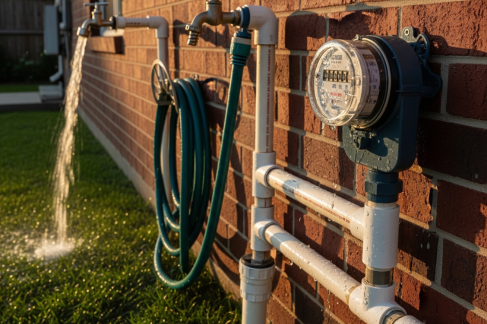
Every home has a limited amount of water flow available. When you use multiple water fixtures at the same time, the available water is split between them, reducing pressure at each outlet. This is especially common in larger households or homes with older plumbing systems.
Why This Happens
High water demand usually occurs because of:
- Multiple showers running simultaneously
- Washing machines and dishwashers operating at the same time
- Lawn sprinklers or irrigation systems consuming large amounts of water
- Large bathtubs filling while other fixtures are in use
- Smaller water supply lines that cannot support high demand
How to Identify It
You may be dealing with high water demand if:
- Water pressure is normal when only one fixture is being used.
- Pressure drops only when several appliances or taps are running.
- The problem disappears once some fixtures are turned off.
- Pressure issues are more noticeable during busy morning or evening hours.
How to Fix It
Fortunately, this problem is often easy to manage:
- Avoid using several water-intensive appliances at the same time.
- Spread out laundry, dishwashing, and bathing schedules.
- Upgrade to larger water supply pipes if your plumbing system is undersized.
- Install water-efficient fixtures and appliances.
- Consider installing a pressure booster pump if your household consistently experiences high demand.
Time to fix: Immediate (behavior change) to 2 days (installation) | Difficulty: Easy to Moderate | Cost: Free to $1,500
Shared Water Line
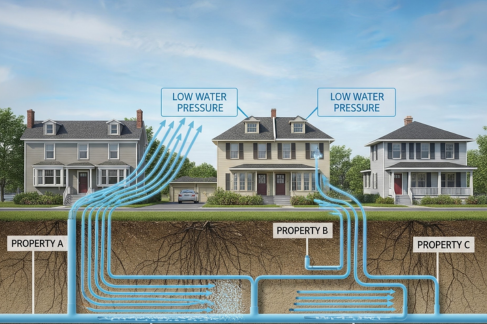
In some neighborhoods, especially older communities, townhomes, duplexes, or apartment complexes, multiple properties may share the same water supply line. When neighboring homes use a large amount of water, your home’s water pressure can temporarily decrease.
Why This Happens
Shared water lines can lead to pressure fluctuations because:
- Several homes are drawing water from the same supply pipe.
- Peak demand periods increase competition for water flow.
- Older shared lines may be too small to serve current usage levels.
- Population growth in the area places additional strain on the system.
How to Identify It
You may have a shared water line if:
- Pressure drops occur at predictable times, such as mornings or evenings.
- The issue affects the whole house.
- Your pressure improves late at night or during off-peak hours.
- Neighbors experience similar problems.
How to Fix It
Although homeowners have limited control over shared supply lines, you can:
- Contact your water utility to confirm whether your property shares a supply line.
- Schedule high-water activities during off-peak hours.
- Install a water pressure booster system.
- Consult a plumber about upgrading your home’s connection, if possible.
Time to fix: 1–3 days for booster installation | Difficulty: Moderate | Cost: $500–$2,500
Faulty Fixture
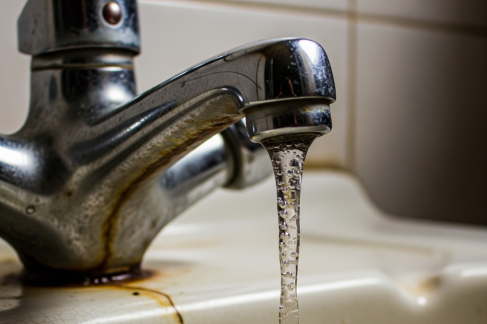
If only one faucet, showerhead, or appliance suffers from weak water pressure, the issue may be isolated to that specific fixture rather than the entire plumbing system.
Why This Happens
Individual fixtures may lose pressure because of:
- Mineral deposits blocking small openings
- Worn-out cartridges or washers
- Damaged internal components
- Clogged aerators
- Aging fixtures that need replacement
How to Identify It
Signs of a faulty fixture include:
- Only one sink or shower has low pressure.
- Cleaning the fixture temporarily improves water flow
- You can see white or green deposits on the fixture
- Pressure was normal before, but has declined gradually
How to Fix It
You can usually resolve the problem by:
- Removing and cleaning the aerator or showerhead.
- Soaking fixtures in vinegar to dissolve mineral deposits and scrubbing with a toothbrush.
- Replacing damaged cartridges or washers.
- Installing a new faucet or showerhead if the fixture is old.
Time to fix: 30 minutes | Difficulty: Easy | Cost: $5–$50
Mineral Buildup
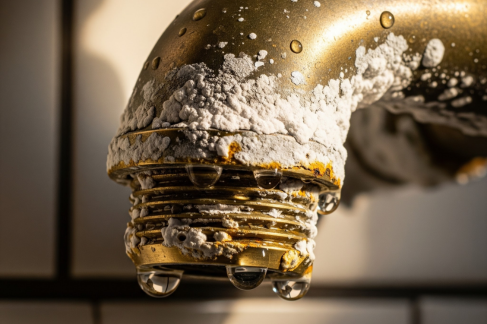
Hard water contains minerals like calcium and magnesium. Over time, these minerals accumulate inside pipes, faucets, and showerheads, restricting water flow and gradually reducing pressure.
In such a scenario, multiple fixtures lose pressure simultaneously across different areas of the home (toilet filling slower, kitchen sink flow reduced, refrigerator dispenser output decreased).
A homeowner on Reddit experienced this exact scenario, noticing their toilet filling slightly slower, kitchen sink losing flow, and refrigerator water dispenser reducing output. When they asked how to diagnose the issue, Janhansivan provided valuable guidance: check your water meter first. If it shows normal usage with no water loss, the culprit is almost certainly mineral scale inside your pipes, not a leak.
Why This Happens
Mineral buildup occurs because:
- Hard water leaves behind calcium deposits.
- Sediment accumulates inside fixtures and pipes.
- Small openings become partially blocked.
- Years of buildup reduce water flow throughout the house.
How to Identify It
You may have mineral buildup if:
- Pressure declines slowly over time.
- White, chalky deposits appear on faucets and showerheads.
- Showerheads spray unevenly.
- Spotty dishes after washing (classic hard water sign)
- You live in an area known for hard water.
How to Fix It
Possible solutions include:
- Soaking showerheads and faucet aerators in vinegar.
- Cleaning or replacing clogged fixtures.
- Flushing water heaters regularly. Use descaling powder.
- Installing a whole-house water softener to prevent future buildup.
- Having severely blocked pipes professionally cleaned.
Time to fix: 1–3 days for softener installation | Difficulty: Moderate to Hard | Cost: $100–$3,000
Pro Tip: Check water hardness level. If the test shows above 7 grains per gallon, it is due to hard water.
Pipe Clogs
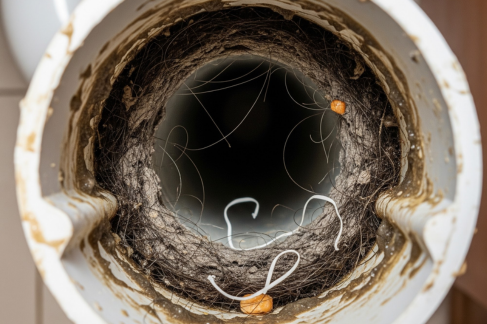
Unlike gradual mineral buildup, pipe clogs often cause a sudden drop in water pressure. Debris, sediment, rust, broken pipe pieces, or foreign objects can partially block pipes and restrict water flow.
Why This Happens
Pipe clogs can develop because of:
- Sediment accumulation
- Rust particles
- Mineral deposits
- Construction debris
- Foreign objects entering plumbing lines
How to Identify It
You may suspect a pipe clog if:
- Pressure drops suddenly.
- Only certain areas of the home are affected.
- Water flow becomes inconsistent.
- The issue appears without warning.
- You may hear gurgling sounds in pipes
How to Fix It
Depending on the severity, solutions may include:
- Flushing the plumbing system.
- Cleaning affected lines.
- Using professional hydro jetting.
- Replacing severely clogged sections of pipe.
Time to fix: 1–4 hours | Difficulty: Moderate | Cost: $100–$500
Corroded Pipes
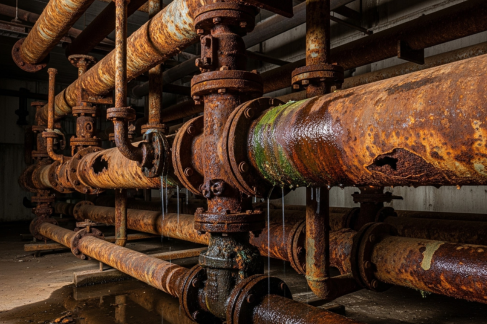
Galvanized steel pipes (common in homes built before 1960) corrode from the inside out. As corrosion builds up, it narrows the pipe’s interior, restricting water flow and reducing pressure.
Why This Happens
Corroded pipes are common in homes with:
- Galvanized steel pipes.
- Plumbing systems over 40–50 years old.
- Hard water conditions.
- Long-term exposure to moisture and oxygen.
How to Identify It
Common signs include:
- Gradually decreasing pressure throughout the home.
- Rust-colored or discolored water.
- Frequent leaks.
- Older plumbing materials.
- Visible rust on exposed pipes.
- Pipes feel magnetic (galvanized steel is magnetic; copper/PEX are not).
How to Fix It
Unfortunately, corrosion cannot be reversed.
Long-term solutions include:
- Replacing galvanized pipes with copper or PEX piping.
- Install a whole-house water filter to remove rust particles.
- Conducting a professional plumbing inspection.
- Upgrading aging plumbing systems.
Time to fix: 3–7 days for full replacement | Difficulty: Hard | Cost: $3,000–$15,000
Water Leaks
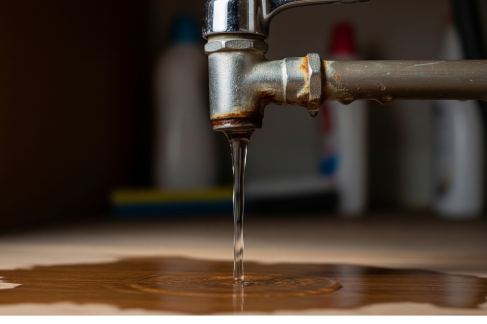
Leaks don’t just waste water—they also reduce the amount of pressure available to your fixtures. Even small leaks allow water to escape before it reaches your fixtures.
Why This Happens
Leaks may develop because of:
- Cracked pipes
- Loose fittings
- Corrosion
- Frozen pipes
- Underground pipe damage
How to Identify It
Look for:
- Unexpected increases in water bills.
- Damp spots on walls, ceilings, or floors.
- Mold or mildew growth.
- Sounds of running water when fixtures are off.
- Reduced pressure in one or more areas.
How to Fix It
Solutions include:
- Tightening loose connections.
- Repairing damaged pipes.
- Detecting hidden leaks with professional equipment.
- Replacing sections of pipe if necessary.
Pro Tip: A sudden spike in your water bill combined with low pressure is often a strong indicator of a hidden leak.
Time to fix: 1–3 days | Difficulty: Moderate to Hard | Cost: $150–$2,000+
Faulty Pressure Regulator
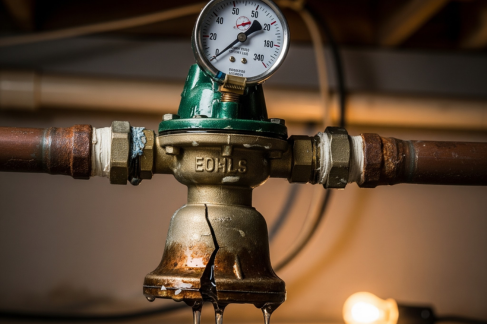
A pressure-reducing valve (PRV) or pressure regulator controls the water pressure entering your home from the city line. When it fails, it can cause low (or sometimes dangerously high) pressure.
Why This Happens
Pressure regulators can fail because of:
- Normal wear and tear
- Age (typically over 10 years)
- Internal spring damage
- Sediment buildup
How to Identify It
Signs include:
- Sudden pressure changes.
- Pressure fluctuates between high and low.
- Whole-house pressure problems.
- A regulator that is over a decade old.
- You hear banging or humming in pipes (water hammer)
How to Fix It
Since pressure regulators require precise adjustment, replacement is usually the best option.
Pro Tip: Hire a professional for the replacement of a faulty pressure regulator
Time to fix: 2–4 hours | Difficulty: Moderate | Cost: $200–$600
Old Plumbing
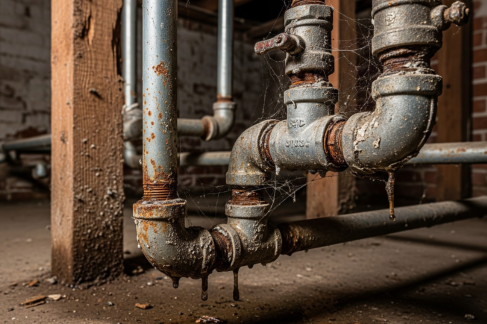
Aging plumbing systems naturally degrade over time. Even if pipes aren’t visibly corroded, older materials (galvanized steel, lead, early plastic) have smaller diameters and deteriorate faster than modern alternatives.
Homes built before the 1960s often contain outdated plumbing systems that were never designed for modern water usage.
Why This Happens
Older plumbing systems may have:
- Galvanized steel pipes
- Smaller pipe diameters
- Years of corrosion and mineral buildup
- Materials nearing the end of their lifespan
How to Identify It
You may have old plumbing if:
- Your home is over 50 years old.
- Water pressure has gradually declined.
- Repairs are becoming more frequent.
- Water appears rusty or discolored.
How to Fix It
Permanent solutions include:
- Replacing old galvanized pipes with PEX or copper.
- Upgrading supply lines.
- Modernizing the home’s plumbing system.
Note: Although repiping is a major investment, it often restores water pressure and prevents costly leaks in the future.
Time to fix: 5–10 days for full replacement | Difficulty: Hard | Cost: $5,000–$20,000
City Water Regulations
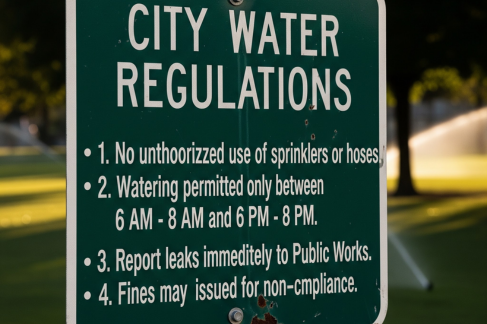
In some areas, local water authorities intentionally reduce water pressure to conserve water or manage supply shortages.
Why This Happens
Pressure reductions may occur because of:
- Drought conditions
- Water conservation programs
- Emergency restrictions
- Infrastructure upgrades
- Seasonal demand management
How to Identify It
You may be affected if:
- The entire neighborhood experiences lower pressure.
- Your water utility confirms pressure reductions.
- No plumbing problems are found inside your home.
- The issue started during drought or conservation periods.
How to Fix It
Since these regulations originate from the utility company, homeowners have limited control. However, you can:
- Contact your local water provider for information.
- Install a pressure booster pump.
- Use water-efficient fixtures.
- Reduce simultaneous water usage.
Time to fix: Varies (depends on utility) | Difficulty: N/A | Cost: $500–$2,000 for booster
Quick Diagnostic Guide
If Your Problem Is… | Likely Cause | First Step |
Whole house, sudden | Municipal issue, closed valve, leak | Check valves, call utility |
Whole house, gradual | Corroded pipes, mineral buildup, old plumbing | Inspect pipes, test water hardness |
One fixture only | Faulty fixture, clogged aerator | Clean or replace the fixture |
Only when multiple fixtures are used | High demand, shared line | Stagger usage, install booster |
Fluctuating pressure | Faulty regulator | Test with gauge, replace regulator |
Neighborhood-wide | City regulations, municipal issue | Contact the utility company |
How to Increase Water Pressure Fast
If poor water pressure is affecting your daily routine, try these quick solutions:
- Fully open the main shut-off valve.
- Clean faucet aerators and showerheads.
- Check for visible leaks.
- Avoid running multiple fixtures simultaneously.
- Flush your water heater.
- Replace old or clogged fixtures.
- Install a whole-house water softener if hard water is an issue.
- Upgrade aging pipes.
- Install a water pressure booster pump for consistently low supply pressure.
Final Thoughts
Low water pressure can turn everyday tasks into frustrating chores, but the underlying cause is often easier to fix than many homeowners realize. From something as simple as a partially closed valve to more serious issues like corroded pipes or hidden leaks, identifying the root cause is the key to restoring strong, reliable water flow.
Whether you need a quick DIY fix or professional plumbing assistance, addressing the problem early can help prevent larger and more expensive repairs down the road. With the right approach, you can enjoy powerful showers, efficient appliances, and a plumbing system that performs the way it should.
If you’ve tried the quick fixes and still struggle with low pressure, Sketchley Mason Plumbing is here to help. Our team can diagnose the root cause accurately and provide lasting solutions—from valve adjustments and fixture replacements to full repiping and pressure booster installations—so you can get your water flowing strong again.
Ready to restore strong water pressure in your home? Contact our professional plumbers for low water pressure today. They will diagnose the issue and provide you with a fast and reliable solution.
Frequently Asked Questions
The ideal water pressure for most homes is between 40 and 60 PSI, with 50 PSI considered the sweet spot. This range provides enough pressure for showers, faucets, and appliances while preventing excessive wear on pipes and plumbing fixtures.
Yes. Water pressure below 40 PSI is generally considered low. You may notice weak shower flow, slow-filling sinks, and reduced performance from appliances like washing machines and dishwashers.
Yes. Water pressure above 80 PSI can put excessive strain on pipes, faucets, water heaters, and household appliances. Over time, high pressure can lead to leaks, premature wear, and costly repairs.
Most residential plumbing systems operate within an acceptable range of 40 to 80 PSI. However, maintaining pressure between 45 and 60 PSI is ideal for optimal performance and fixture longevity.
Proper water pressure ensures that appliances such as dishwashers, washing machines, and water softeners receive adequate water flow. In fact, many water softeners require at least 35 PSI to function efficiently.
Yes. Maintaining proper water pressure helps reduce strain on pipes, valves, and fixtures, preventing premature wear and extending the life of your plumbing system.
For single-family homes that rely on groundwater wells, the pressure tank is typically set to 60 PSI. This provides consistent water delivery throughout the home and supports the needs of modern plumbing fixtures and appliances.
Not necessarily. While frozen pipes can restrict water flow and cause low water pressure, they are only one of many possible causes. Low pressure can also result from clogged pipes, leaks, partially closed valves, municipal supply issues, or a faulty pressure regulator. However, if the problem occurs during extremely cold weather and affects only certain fixtures, frozen pipes may be the culprit.
Yes, in some cases. You can check that the main shut-off valve is fully open, clean clogged faucet aerators, and adjust the pressure regulator if your home has one. However, because excessive pressure can damage pipes and appliances, it's best to consult a plumber if you're unsure or if pressure problems persist.
The easiest way to test water pressure is with a pressure gauge, which can be attached to an outdoor hose bib or laundry faucet. Turn off all water-using appliances and fixtures, then check the reading. Most homes should have a pressure between 40 and 60 PSI, with 50 PSI considered ideal. If the reading is below 40 PSI, you may have a low water pressure problem.
Yes. Cold weather can contribute to low water pressure in several ways. Pipes may partially freeze, restricting water flow, and increased water demand in some areas during winter can also affect municipal supply pressure. If you notice a sudden drop in pressure during freezing temperatures, inspect exposed pipes and contact a plumber if you suspect freezing.
The cost of installing a water pressure booster pump typically ranges from $500 to $2,500, including labor. The final price depends on the size of the home, the type of booster system, and the complexity of the installation. Larger homes or systems requiring electrical upgrades may cost more.
Having a plumber adjust your water pressure generally costs between $100 and $300. If the issue is simply a pressure regulator adjustment, the cost is usually on the lower end. However, if the pressure regulator needs to be repaired or replaced, the total cost can range from $150 to $500 or more, depending on the parts and labor involved.
Most homeowners should schedule a professional plumbing inspection once a year to catch minor issues before they become costly repairs. However, homes with older plumbing, hard water, or recurring problems may benefit from inspections every six months. Regular inspections help maintain healthy water pressure, prevent leaks, and extend the lifespan of your plumbing system.
It is recommended to contact a professional if:
- Low pressure affects the entire house.
- You suspect hidden leaks.
- Water pressure drops suddenly without explanation.
- Your home has old galvanized pipes.
- Pressure fluctuates unpredictably.
- DIY solutions fail to restore normal flow.
A licensed plumber can accurately diagnose the problem and recommend the most cost-effective solution.
Preventing low water pressure is often easier and less expensive than fixing it. A few simple maintenance habits can help keep your plumbing system running efficiently and ensure strong, consistent water flow throughout your home.
Here are some tips to help prevent low water pressure:
- Clean faucet aerators and showerheads regularly to remove mineral buildup.
- Check for leaks and repair them promptly.
- Ensure main shut-off valves remain fully open.
- Avoid running multiple water-intensive appliances simultaneously.
- Schedule periodic plumbing inspections, especially in older homes.
- Install a water softener if you have hard water.
- Replace aging or corroded pipes before they become severely restricted.
- Monitor your home's water pressure periodically with a pressure gauge.
- Install a pressure regulator or booster pump if recommended by a plumber.
Pro Tip: Annual plumbing maintenance can help catch minor issues before they turn into major problems. Regular inspections and preventive care are often the best way to maintain healthy water pressure and avoid costly repairs.