- Turn off the valve first to stop overflow.
- Try hot water or dish soap — fastest fixes.
- Use baking soda + vinegar for tougher clogs.
- If water is high, remove some first or use no-liquid methods.
- Don’t rush the flush — wait before trying again.
- If nothing works or clogs repeat, call a plumber.
You flush… and instead of going down, the water starts rising. No plunger in sight. That sudden panic? Completely normal.
In this moment, things can get out of control fast. The bowl keeps filling, and one wrong move can lead to an overflow. Most people either freeze or keep flushing, hoping it fixes itself, but that usually makes it worse.
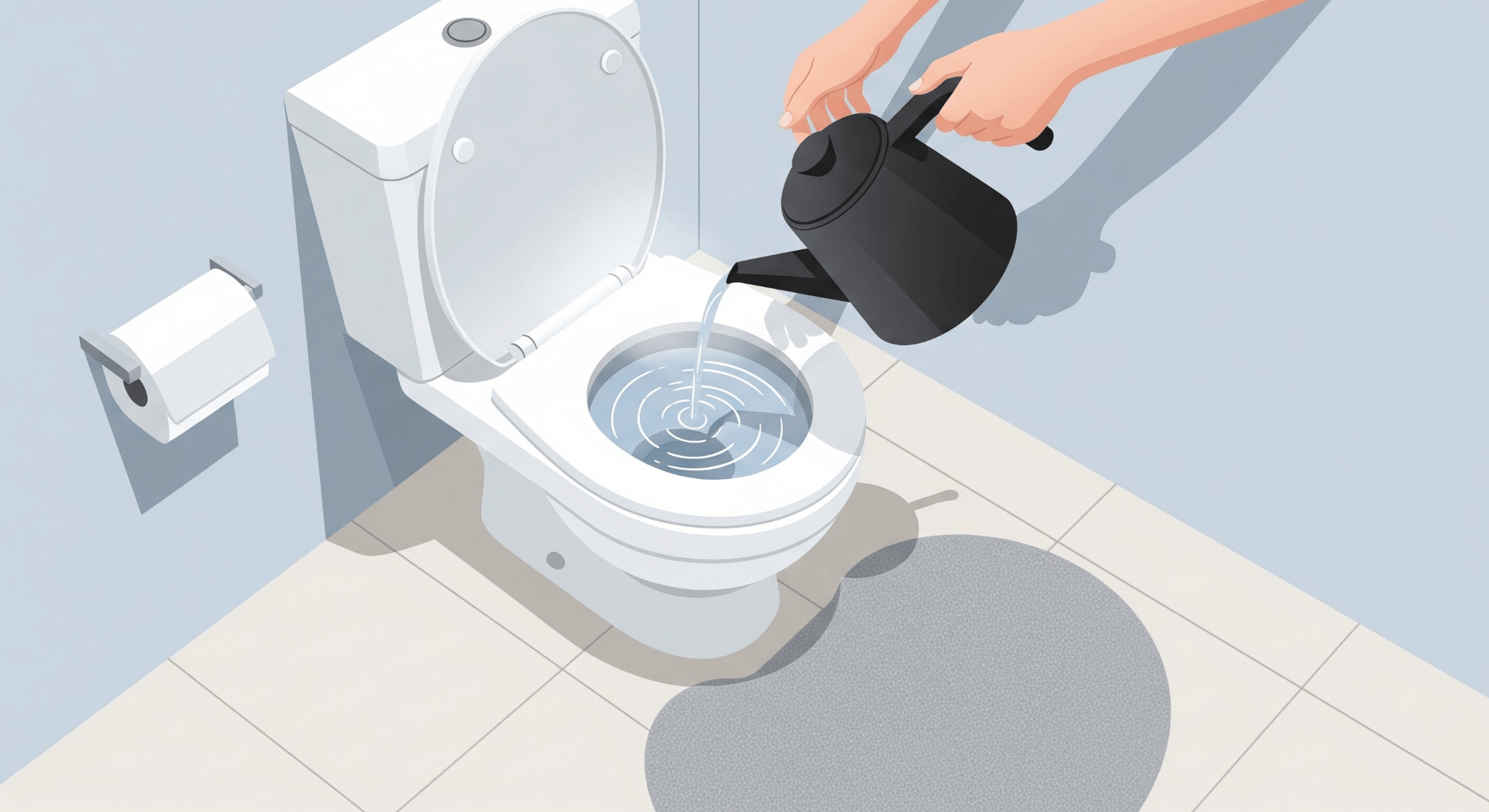
Here’s what you need to do first: reach behind the toilet and turn the water supply valve clockwise until it stops. This cuts off the incoming water and prevents a mess. Can’t find it? Open the tank and press the rubber flapper down to stop the flow manually.
Once the water is under control, you’re already halfway there. In this guide, we’ll walk you through simple, proven fixes you can use right away, no plunger needed.
How Do I Unclog a Toilet Without a Plunger?
Try these 7 fixes in order; most soft clogs clear by Fix 2 or 3.
Fix 1 — Hot Water
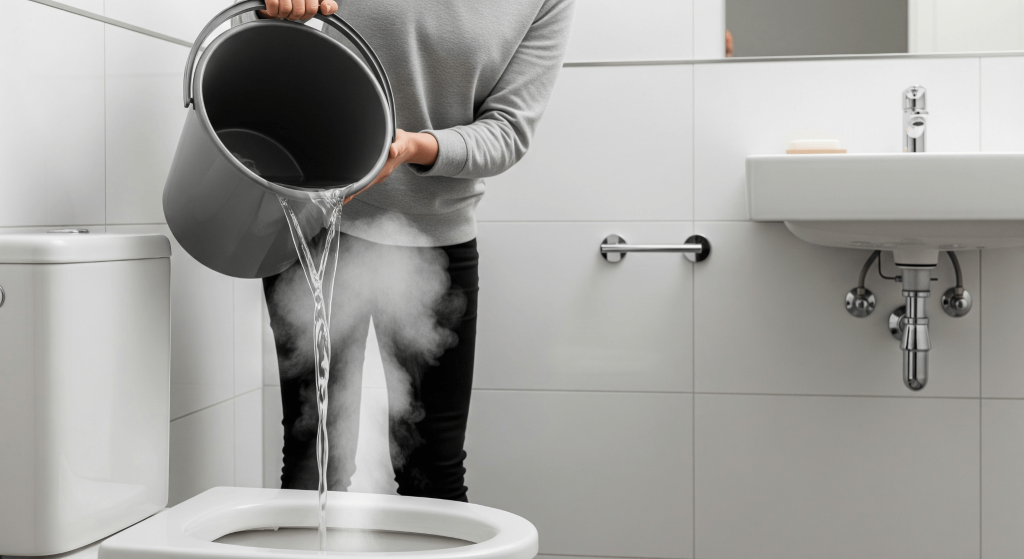
This is the simplest fix, and it works more often than people expect. Heat the water on the stove or in a kettle until it’s hot, but not boiling. Boiling water can actually crack the porcelain bowl, so pull it off the heat just before it hits a full boil.
Pour it into the bowl from waist height; that drop creates a bit of natural pressure as it hits. Then just wait 10–15 minutes and try a flush. You’ll be surprised how often this alone does the job.
Fix 2 — Dish Soap + Hot Water
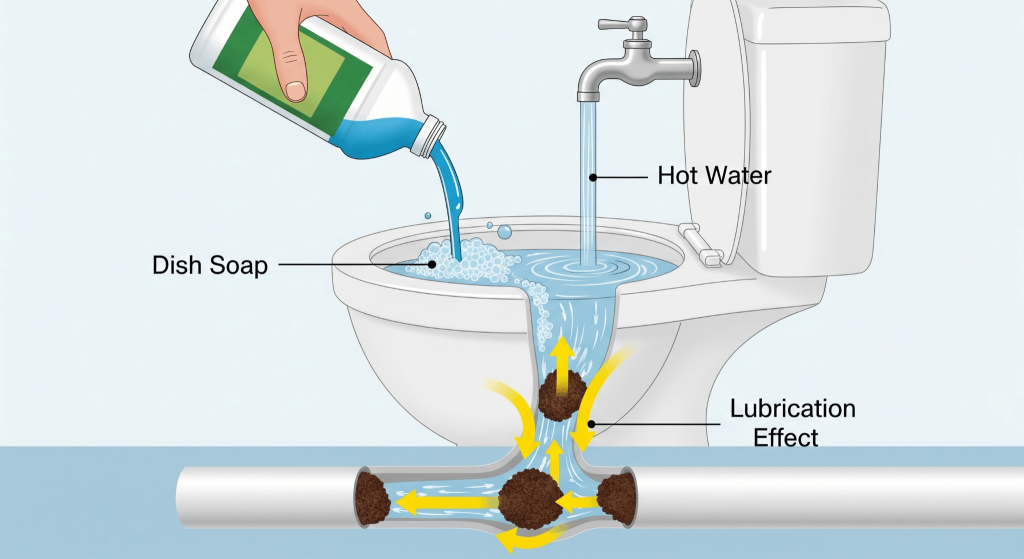
Still clogged? Grab your dish soap from the kitchen. Squirt about ¼ cup into the toilet bowl and let it sit for 10–15 minutes.
What’s happening in there: the soap coats the inside of the drain and lubricates the clog so it can slide through. After the wait, follow up with a pour of hot water from waist height. No mixing, no measuring, just pour and wait.
Fix 3 — Baking Soda + Vinegar
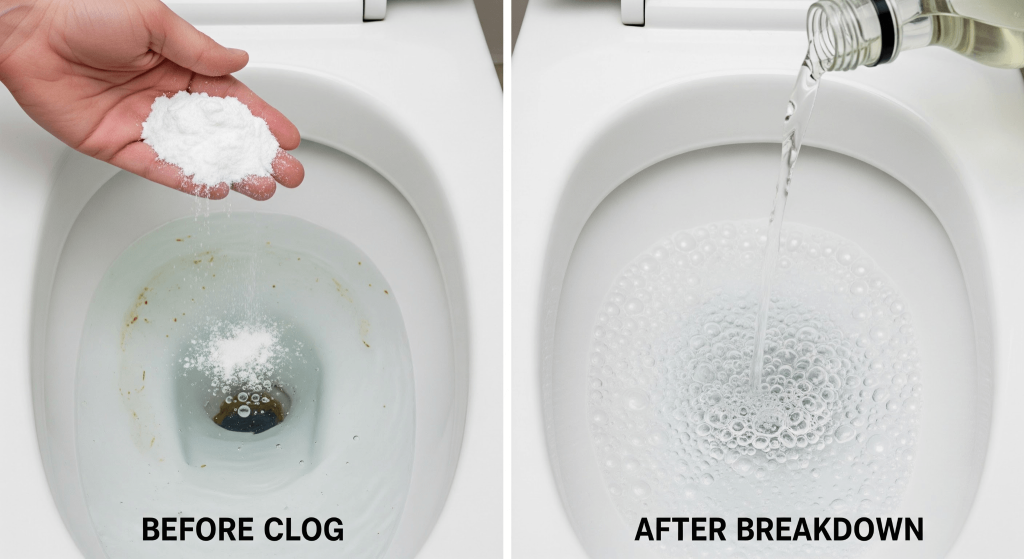
This one is the classic for a reason. Pour 1 cup of baking soda into the bowl first. Then, slowly add 2 cups of white vinegar. You’ll see it fizz up; that’s the chemical reaction doing the work, breaking down organic material like toilet paper that’s packed into the drain.
Let it sit for 30 minutes. Don’t rush this. Then flush with hot water and see where things stand.
| 💬 Real people, same problem: Wondering if this actually works? Check out this thread on Reddit’s r/lifehacks, where homeowners share exactly how they’ve handled clogged toilets without a plunger, and the baking soda + soap combo comes up again and again. |
Fix 4 — Plastic Wrap Vacuum
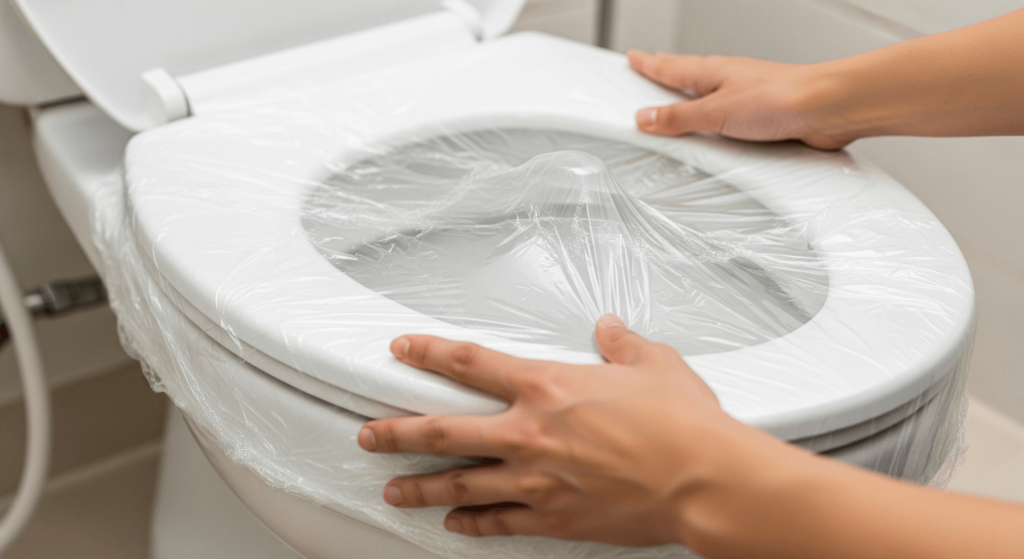
This one sounds odd, but it genuinely works, and it’s especially useful when the water level is already high because you’re not adding anything to the bowl.
Stretch cling wrap tightly across the entire toilet rim, and overlap it a few times to make a strong seal. Then flush. The plastic will dome upward from the pressure. Push it down firmly with your hands. That air pressure pushes the clog through from above, like a plunger.
Fix 5 — Plastic Bottle Water Jet

If the water is too high to work with, scoop some out first using a cup, just transfer it into a bucket until you have room.
Then fill a 2-liter plastic bottle with warm water. Put the opening directly into the drain hole and squeeze as hard and fast as you can. The burst of water mimics the hydraulic push of a plunger and can break apart the clog from the pressure alone.
Fix 6 — Wire Coat Hanger Snake
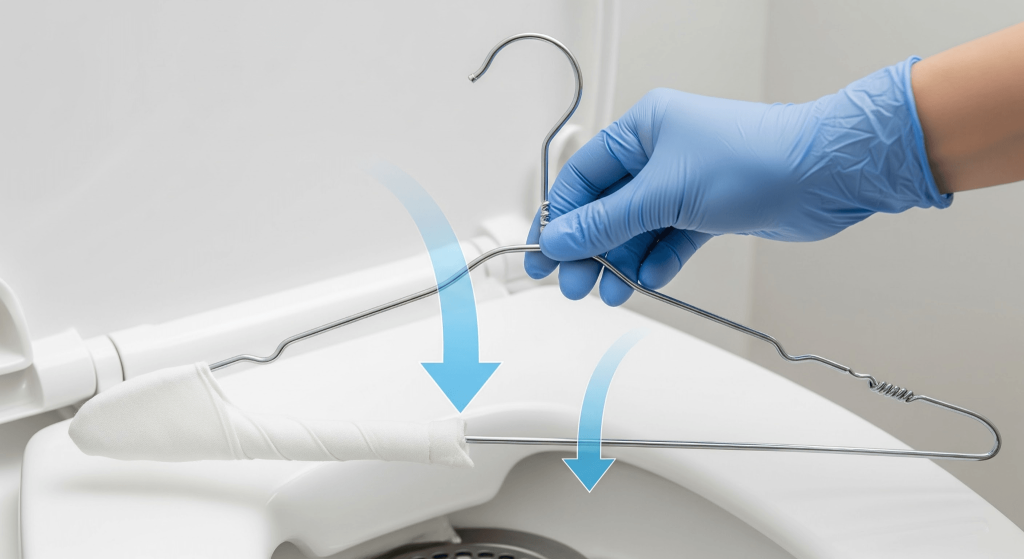
If liquid fixes aren’t shifting it, the clog might be sitting a bit deeper in the pipe, which means you need something physical to reach it.
Straighten a wire coat hanger and wrap one end in a rag or tape to avoid scratching the porcelain. Gently push it into the drain and twist and probe slowly. You’re either breaking the clog apart or hooking it to pull it out.
Fix 7 — Toilet Brush
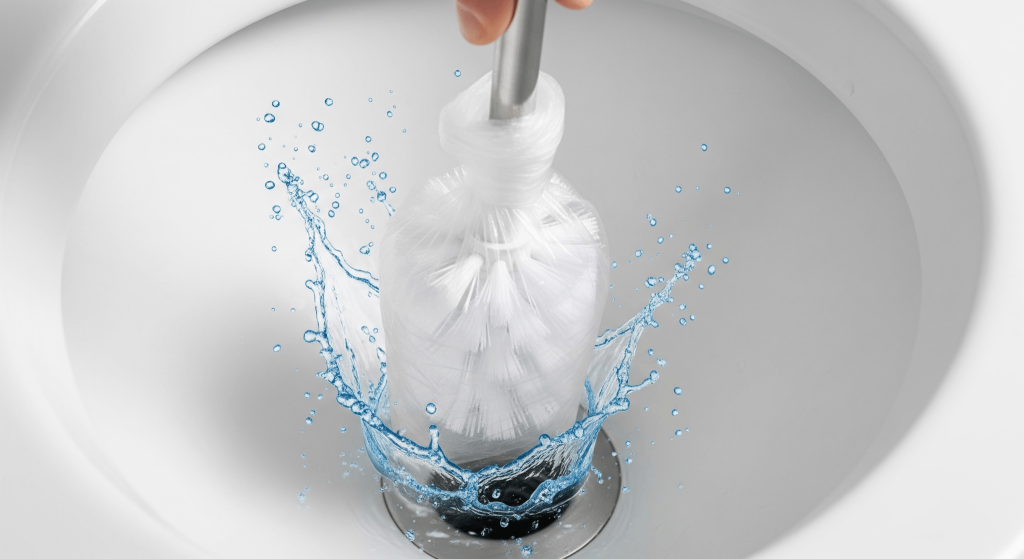
This is the last manual option before you consider calling someone. It’s not pretty, but it works.
Angle the bristle end of the toilet brush into the drain and pump it up and down in a plunging motion. For extra suction, wrap the brush head in a plastic bag before inserting it. This creates a tighter seal against the drain opening.
Still nothing? That’s your signal to move to the next section.
What If the Water Is Already Too High to Add Anything?
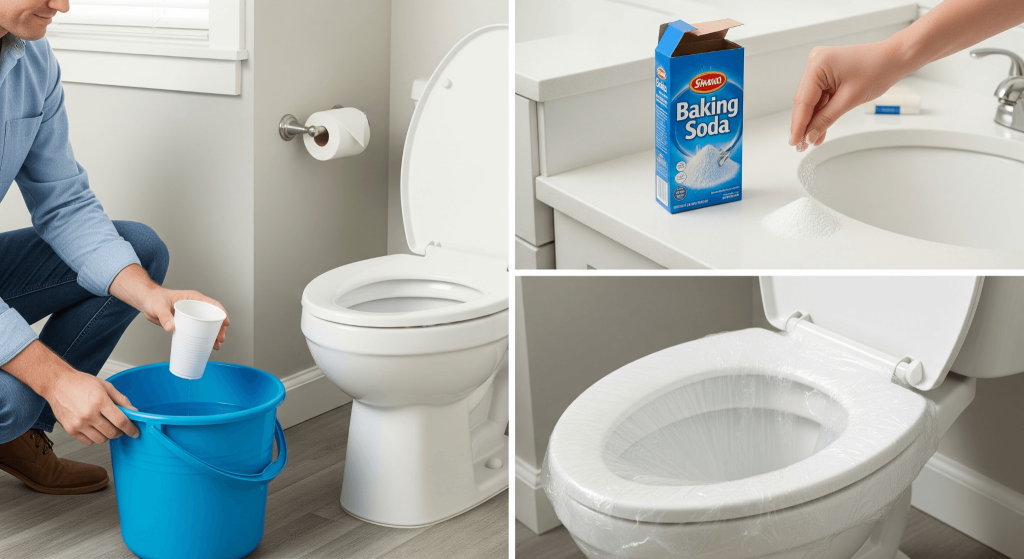
This is where a lot of people freeze up. The bowl is nearly full, and adding more liquid feels like a disaster waiting to happen. Don’t add anything yet.
Instead, grab a cup and scoop water into a bucket until the level drops to a manageable level. It takes two minutes, and it gives you room to actually work.
Once you have space, your two safest options are:
- Fix 3 (baking soda + vinegar): add the baking soda first, wait for it to settle into the water, then pour the vinegar in slowly along the sides so it doesn’t splash.
- Fix 4 (plastic wrap): no liquid at all, just seal the rim and use pressure. The safest choice when the bowl is still fairly full.
After applying either fix, wait a full 20 minutes before flushing. Attempting a flush too early, when the bowl is high, causes overflow. Slow and controlled.
| 🔧 While you’re here: If your toilet keeps running even after you unclog it, that’s a separate issue worth sorting. Our guide on quick DIY plumbing repair tips to prevent water loss walks you through common toilet problems, including running water, weak flushes, and more, step by step. |
And one thing worth knowing: what goes down your drain matters more than you’d think. A 30,000kg fatberg was recently removed from a sewer in Western Australia, built entirely from flushed wipes, grease, and non-flushable items. Only toilet paper should go down the drain.
When Should I Stop Doing It Myself and Call a Plumber?

If you’ve worked through all 7 fixes and the toilet is still blocked, the clog is likely too deep in the drain line for household methods to reach, or there’s a solid foreign object lodged in the pipe.
Before you call, you can try one more thing: a toilet auger (also called a closet auger). It’s a flexible cable tool designed specifically for toilets, it reaches deeper than a coat hanger and can break through or retrieve objects that nothing else can. You’ll find one at any hardware store for under £25.
But put the auger down and call a plumber if you notice any of these:
- Gurgling from other drains when you flush means the blockage is affecting the shared drain line
- Sewage smell coming up from drains or outside
- Water backs up in the tub or sink when the toilet is flushed
- The same toilet keeps clogging within days or weeks; that’s a structural issue, not just bad luck
Repeated clogs are the biggest red flag. One bad flush is normal. Three in a fortnight is a sign that something is wrong deeper in your plumbing, and that’s worth having a professional look at before it becomes a much bigger (and more expensive) problem.
The Bottom Line
The moment the water starts rising, turn off that supply valve, clockwise, all the way. That one step stops the situation from becoming a disaster and gives you time to actually fix the problem.
Then work through the fixes in order, starting with the simplest. The majority of toilet clogs sort themselves out within 30 minutes using hot water, dish soap, or baking soda, things already sitting in your kitchen.
And if it keeps happening? That’s your sign to bring in a professional. One call now is a lot cheaper than dealing with a flooded bathroom later.
At Sketchley & Mason, Inc., we believe in helping homeowners fix simple problems themselves, but also in knowing when expert help can save you time, stress, and money on bigger repairs.
Frequently Asked Questions
Can you unclog a toilet without a plunger?
Yes, and most of the time it’s easier than you think. Hot water, dish soap, baking soda and vinegar, plastic wrap, a water bottle, a wire hanger, or even a toilet brush can all generate enough force or chemical action to clear a soft clog. The majority of blockages caused by toilet paper or organic material clear within 20–30 minutes using these methods.
How do you unclog a toilet when the water is already high?
Start by scooping water out into a bucket until the level drops. Then use Fix 3 (baking soda and vinegar, added carefully) or Fix 4 (plastic wrap, no liquid required). Keep the supply valve turned off, wait at least 20 minutes, and flush slowly once the water level looks stable.
Why is my plunger not unclogging the toilet?
A plunger loses effectiveness when it can’t form a proper seal around the drain, when the clog is too far down the pipe, or when there’s a solid object blocking the way. If your plunger isn’t working, try hot water or the baking soda method. If nothing shifts it, a toilet auger or a plumber is the next call.
What is the fastest home remedy for a clogged toilet?
Hot water alone, or dish soap followed by hot water, is the fastest route. Both take just 10–15 minutes and work well on most fresh, soft clogs. For something that’s been sitting longer, baking soda and vinegar with a 30-minute soak give the chemical reaction enough time to properly break down the blockage.
How do I clear a blocked toilet when nothing works?
If all 7 fixes have failed, try a toilet auger; it reaches deeper than any manual method. If the auger doesn’t work or you see any red flags (gurgling drains, sewage smell, or water backing up elsewhere), it’s time to call a plumber. These signs point to a deeper drain line issue that needs professional tools to fix safely.