
Table of Contents:
- What Hard Water Actually Is
- 8 Signs You Have Hard Water in Your Simi Valley Home
- Why Hard Water Is So Common in Simi Valley
- How to Treat Hard Water
- Conclusion
- Frequently Asked Questions
- Hard water contains high levels of calcium and magnesium that dissolve into water as it passes through underground rock formations
- Simi Valley water is classified as very hard, with mineral levels well above the national average
- Common signs include white scale on faucets, cloudy dishes, soap scum, stiff laundry, and dry skin or hair
- Mineral buildup can reduce water pressure and shorten the lifespan of appliances like water heaters and dishwashers
- Hard water is safe to drink, but it can increase the effort required for cleaning and the amount of soap used in the home
- Temporary fixes such as vinegar descaling, citric acid cleaning, and flushing the water heater can reduce buildup
- Permanent solutions include installing a water softener, a salt-free conditioner, or a reverse osmosis system to effectively manage minerals
Hard water is a common water quality issue in Simi Valley, quietly affecting your plumbing system, appliances, and even your skin. The good news is that it is not difficult to identify and fix hard water problems.
What Hard Water Actually Is
Hard water contains high levels of dissolved minerals, mainly calcium and magnesium, which come from underground rock formations such as limestone, chalk, and gypsum. Water hardness is usually measured in grains per gallon (GPG) or milligrams per liter (mg/L) of dissolved minerals.
8 Signs You Have Hard Water in Your Simi Valley Home
The following are the top 8 signs of hard water:
White chalky deposits on faucets and showerheads
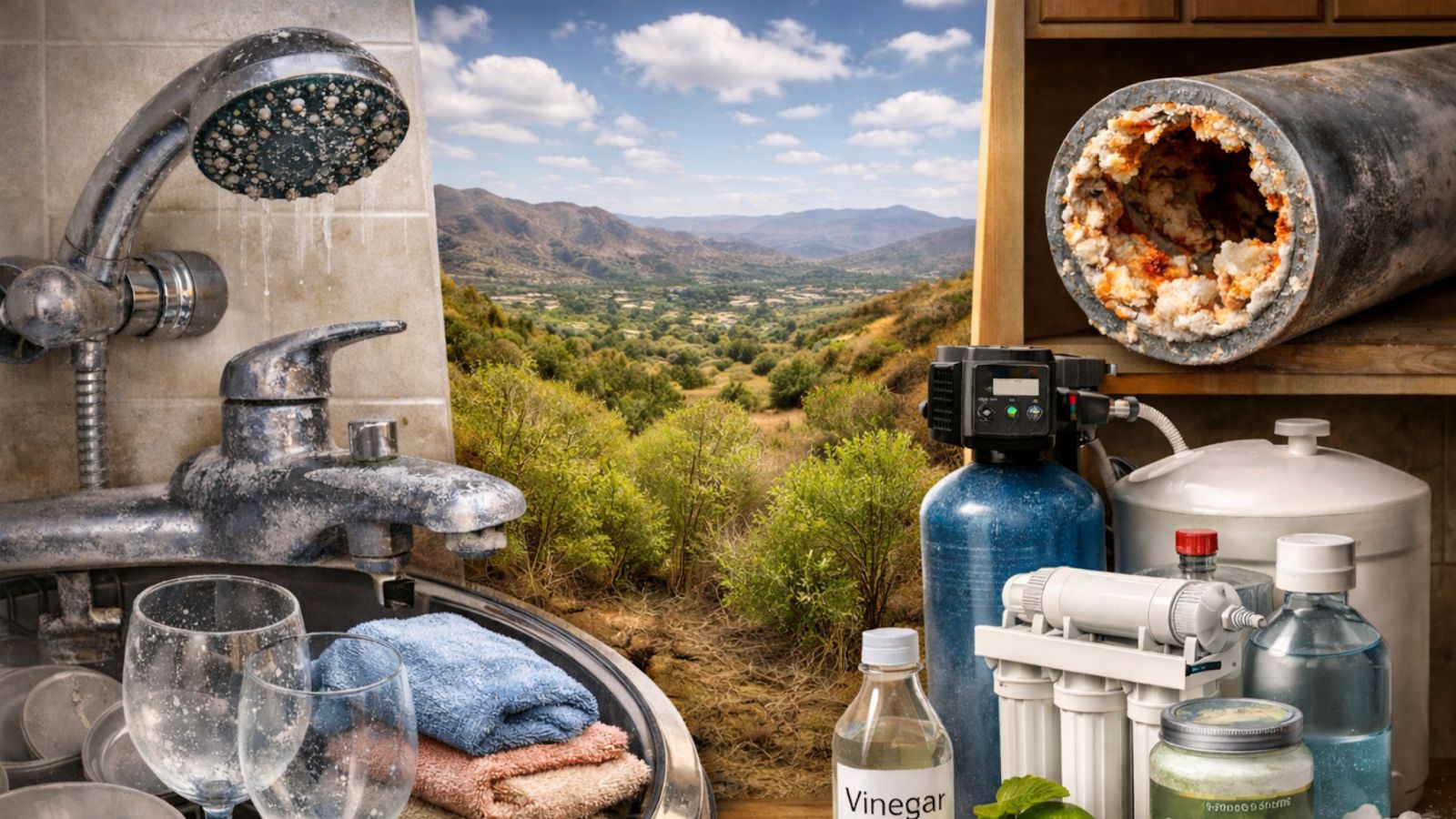
Hard water leaves calcium carbonate behind when it evaporates, leading to crusty white or off-white deposits around faucets and showerheads. Over time, this scale hardens into a thick crust that is difficult to remove.
Cloudy spots on dishes and glassware
Glasses still look milky or spotted after your dishwasher finishes a cycle. Calcium and magnesium react with dishwasher detergent, reducing the detergent’s ability to fully dissolve and rinse away minerals. When the water dries, leftover minerals remain on the glass surface as cloudy spots or film.
Soap that won’t lather easily
When used with hard water, the soap molecules bind with the minerals and form insoluble compounds, instead of forming a rich lather. As a result, you need more soap or shampoo to get the same lather.
Soap scum buildup in tubs and sinks
When soap combines with calcium, it forms a sticky, insoluble substance that clings to shower walls, builds up on bathtubs, and leaves a dull film on sinks and tiles. This residue can trap dirt and bacteria, making surfaces harder to clean.
Reduced water pressure
Over time, scale buildup narrows the interior diameter of the pipe, reducing water flow at faucets, weakening shower pressure, and causing uneven water distribution in the home. Mineral scale can reduce pipe capacity by 30–50 percent over many years.
Frequent appliance repairs
Mineral buildup often shortens the lifespan of appliances such as water heaters, dishwashers, washing machines, coffee makers, and ice makers. Scale formation can increase component wear, requiring frequent repairs.
Dry skin and an itchy scalp after showering
Minerals in hard water interfere with how soap rinses off. Soap leaves a thin mineral-soap film on your skin, which can block natural skin oils, cause dryness and irritation, and leave hair feeling rough or dull.
Laundry feels stiff or faded
Calcium and magnesium ions make hard water less effective. As a result, clothes are not rinsed as thoroughly. This can lead to stiff fabric, dull or faded colors, and white residue on dark clothing. Clothes feel rough even after multiple wash cycles.
Why Hard Water Is So Common in Simi Valley
Simi Valley is nestled between the Santa Susana Mountains and the Simi Hills, which are largely composed of ancient marine sedimentary rocks, including limestone and sandstone, that date back millions of years.
The valley is an enclosed basin with limited drainage, keeping minerals concentrated in the local water supply.
| Location | Hardness (ppm) | Hardness (GPG) | Classification |
| Simi Valley | ∼285 | ∼16.7 | Very Hard |
| National Average | ∼120 | ∼7.0 | Moderately Hard / Hard |
How to Treat Hard Water
Now the question is: how to get rid of hard water? The following are the temporary and permanent hard water solutions:
Quick Temporary Fixes
Vinegar Descaling
- Fill a plastic bag with vinegar, secure it around your showerhead or faucet with a rubber band, and let it soak for 30–60 minutes.
- For glass shower doors, spray a 50/50 water-vinegar mix and squeegee it off immediately to prevent permanent mineral damage.
Citric Acid Cleaning
Add 1–2 tablespoons of citric acid powder to a full wash cycle. It dissolves scale from heating elements, restoring efficiency and flavor.
Water Heater Flushing
Drain and flush your tank once a year. This clears out sediment, which can extend the life of your heater by several years and lower your gas or electric bill.
Dishwasher Rinse Aid
Always keep your rinse aid compartment full. Rinse aids break the surface tension of the water, allowing it to sheet off the dishes rather than evaporating in place.
Permanent Solutions to Hard Water
Whole-House Water Softener
It uses “ion exchange” to physically remove calcium and magnesium, replacing them with a tiny amount of sodium. You get truly soft water that feels “silky” in the shower, uses 50% less soap, and eliminates scale buildup entirely.
Salt-Free Water Conditioners
These systems use Template-Assisted Crystallization (TAC) to alter the structure of minerals so they don’t stick to pipes.
Reverse Osmosis Systems
A reverse osmosis system forces water through a semipermeable membrane, removing 99% of all dissolved solids (not just minerals, but also fluoride, lead, and chlorine). It’s the only way to get “bottled-quality” water straight from the tap.
Conclusion
Simi Valley hard water is a constant drain on your plumbing, appliances, and time spent cleaning. All these minerals are naturally occurring and safe to ingest. However, the impact on your home’s infrastructure is undeniable.
From plumbing repairs and installations to maintenance, Sketchley & Mason, Inc. has offered reliable plumbing services in Simi Valley since 1921.
Book now!
Frequently Asked Questions
Is hard water safe to drink?
Hard water is generally safe to drink and not dangerous, often providing beneficial dietary minerals like calcium and magnesium.
Will hard water ruin my hair?
The high mineral content that sticks to the hair shaft blocks moisture from penetrating, leading to chronic dryness, brittle strands, and a lack of shine.
How does lime get into your drinking water?
Lime gets into your drinking water through mineral leaching. Rainwater is slightly acidic in nature. As it seeps through the earth into Simi Valley’s underground aquifers, it dissolves the limestone and sedimentary rock it passes through, picking up minerals and increasing water hardness.
Can hard water damage plumbing pipes?
Hard water damages pipes through scale buildup, a process where dissolved calcium and magnesium solidify into a hard “rock” crust inside your plumbing. Over time, this layer narrows the pipe’s diameter, restricting water flow and increasing internal pressure.